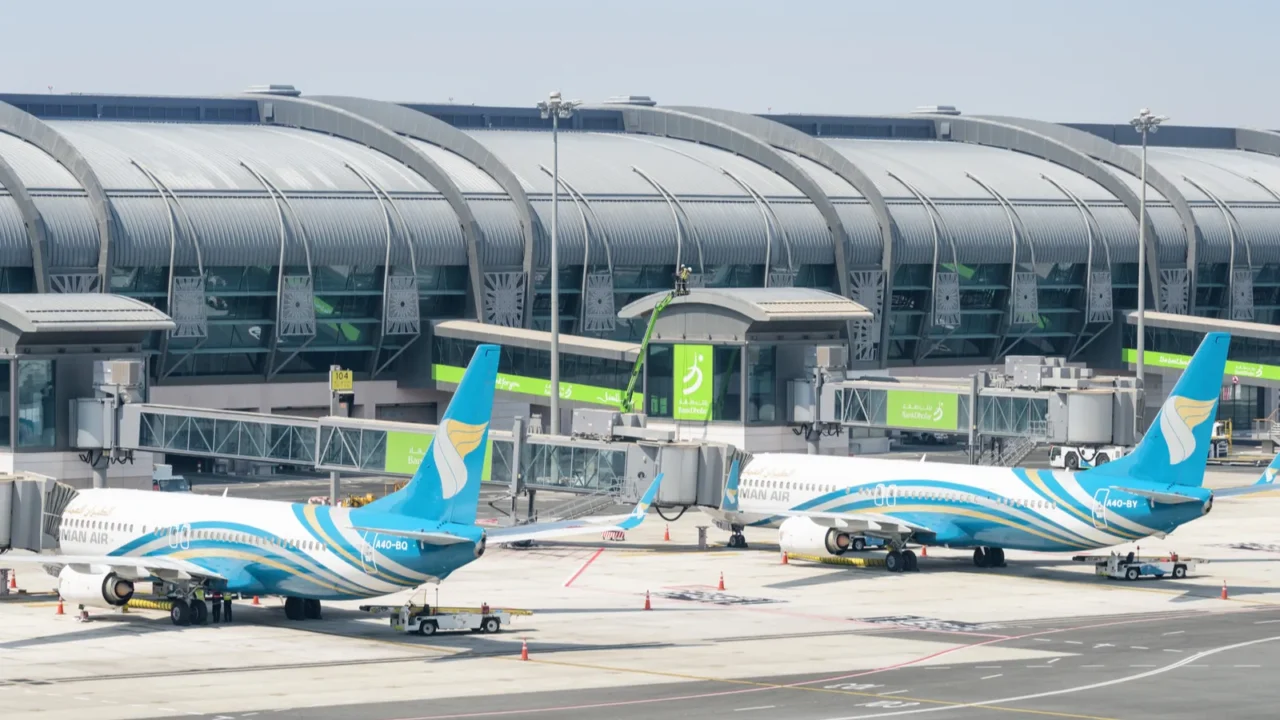
Routes grounded
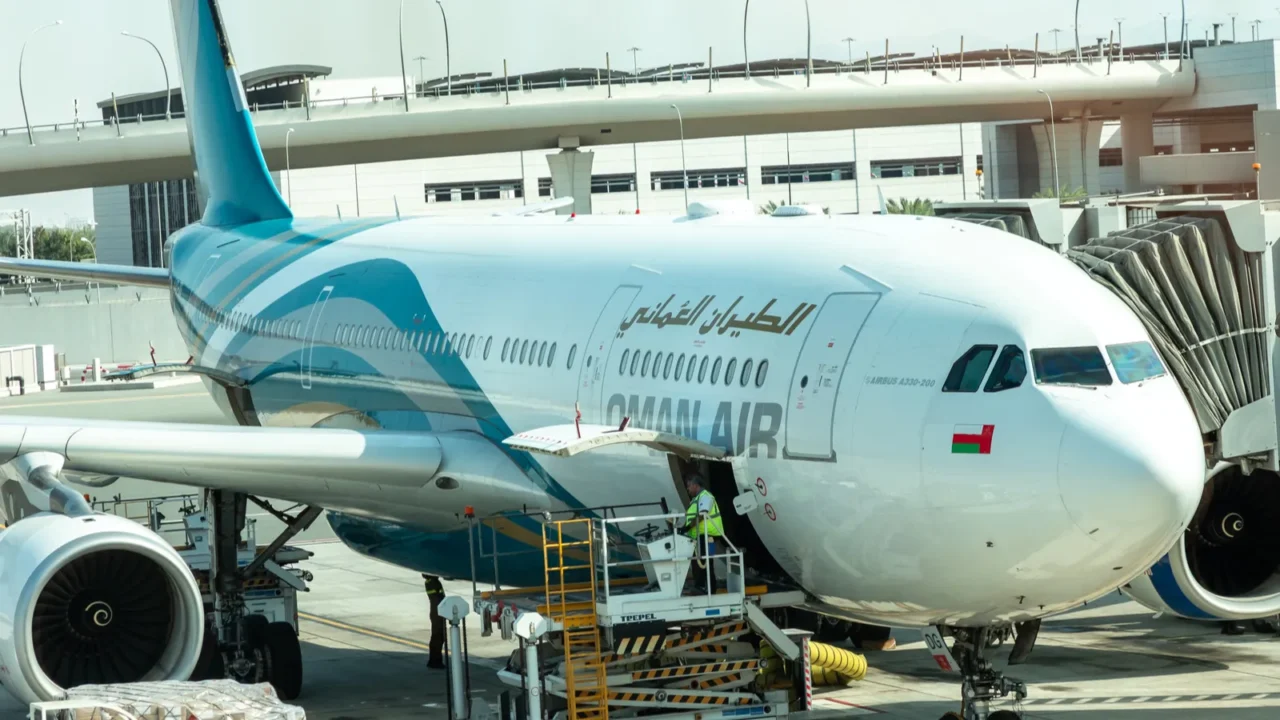
Oman Air, the national carrier of the Sultanate of Oman, suspended several international routes starting February 28, 2026, after the United States and Israel launched coordinated military strikes on Iran. Safety was the stated reason. Nine destinations were halted: Baghdad, Amman, Dubai, Bahrain, Doha, Dammam, Kuwait, Copenhagen, and Khasab.
Airspace closures swept across at least eight nations simultaneously. Oman Air stated that any rerouting would use paths entirely clear of conflict zones and directed passengers to check their website for updates.
Baghdad first
Oman Air announced on its official social media on February 28, 2026, that all flights to and from Baghdad, Iraq, were immediately suspended due to regional instability following US and Israeli strikes on Iran. The airline confirmed all remaining routes would continue operating as scheduled.
Where rerouting became necessary, the airline pledged to redirect flights along paths entirely clear of conflict areas. Passengers were advised to verify flight status at the official website before heading to the airport.
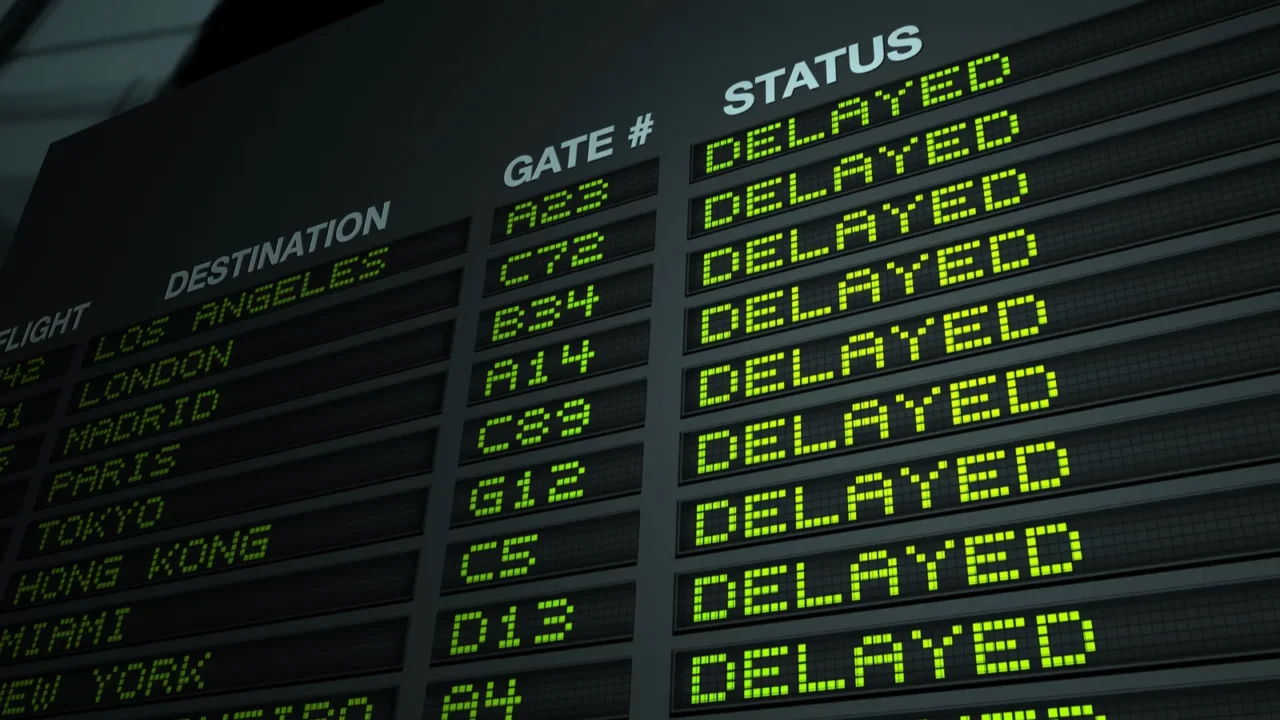
Nine routes halted
By late March 2026, Oman Air said flights to and from Amman, Dubai, Bahrain, Doha, Dammam, Kuwait, Copenhagen, Baghdad, and Khasab were canceled through March 31, 2026. The airline told passengers to manage bookings through its website or mobile app as regional airspace closures continued to disrupt schedules.
The airline attributed every suspension to ongoing airspace volatility across Gulf and Middle East corridors, which rendered those flight paths unavailable for safe commercial transit. Passengers were directed to manage bookings through the Oman Air website or mobile app.
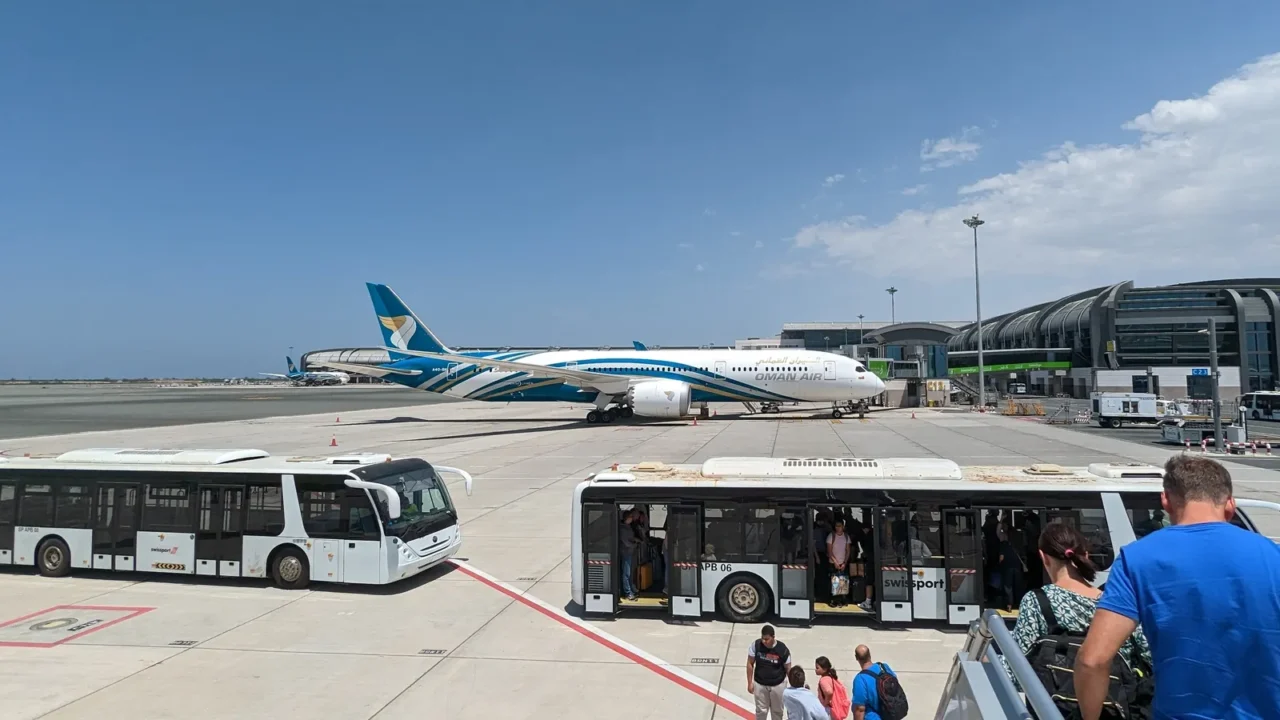
SalamAir grounds all
SalamAir later confirmed targeted suspensions across several regional routes as the conflict disrupted normal operations. Its official updates showed flights to Kuwait, Sharjah, Doha, and Dammam paused, while services to Iraq, Lebanon, and Iran were suspended for a longer period. The airline directly contacted all affected passengers and monitored conditions before announcing a phased return.
Later, SalamAir extended targeted suspensions further. Flights to Kuwait, Sharjah, Doha, and Dammam were halted through March 20, while routes to Iraq, Lebanon, and Iran were suspended through March 28. The airline added extra Muscat to Fujairah services to absorb displaced demand.

Eight airspaces shut
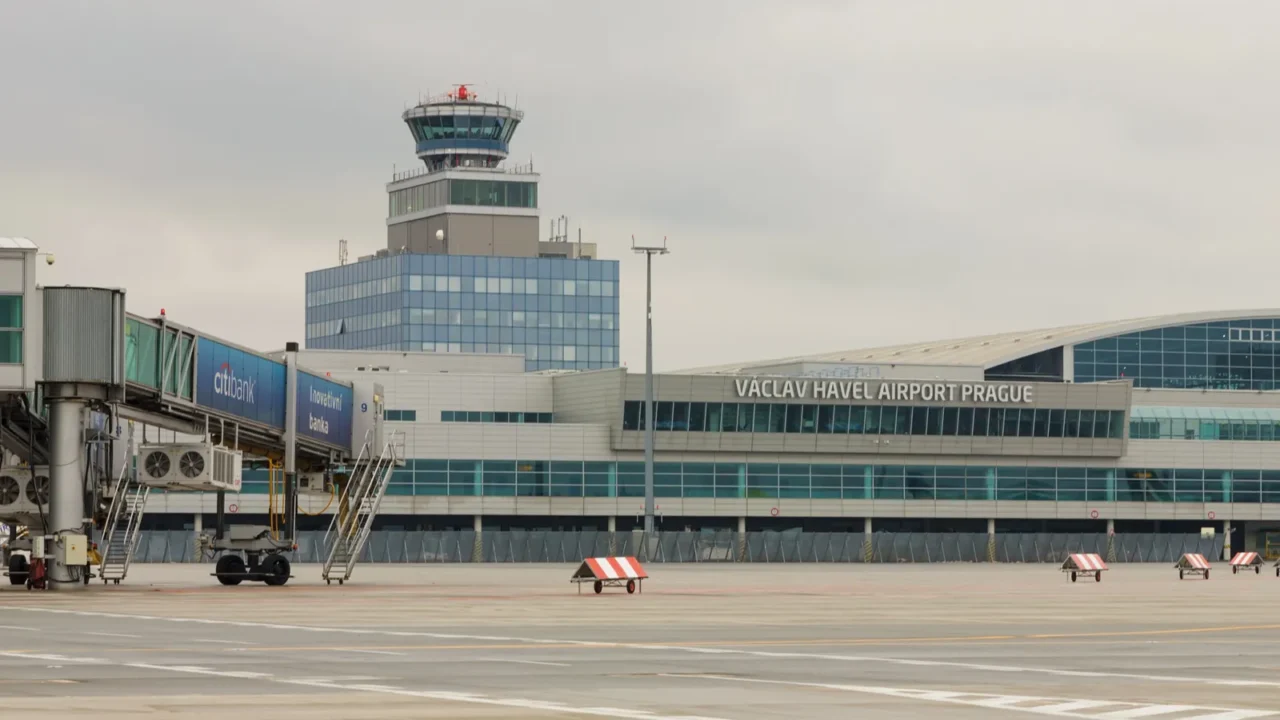
After the February 28 strikes, much of the region’s airspace either closed or became severely restricted within hours. Reuters reporting and flight tracking data showed major disruption across Iran, Iraq, Kuwait, Israel, Bahrain, the UAE, and Qatar, with key hubs such as Dubai, Doha, and Abu Dhabi heavily affected. Syria closed part of its southern airspace along the Israeli border.
Fact: Cirium data cited by the Associated Press showed that more than 19,000 of roughly 51,600 scheduled flights into and out of the Middle East were canceled during the early phase of the conflict. Later Reuters reporting said the broader number of disrupted flights in the region had climbed to around 30,000 as the crisis dragged on.
EASA raises alarm
Europe’s aviation safety authority, EASA, issued Conflict Zone Information Bulletin CZIB 2026-03-R2, advising operators to avoid flying at any altitude over Iran, Iraq, Israel, Jordan, Lebanon, Bahrain, Kuwait, Qatar, the UAE, Oman, and Saudi Arabia.
The bulletin was among the broadest airspace-avoidance advisories EASA had issued in recent years, prompting airlines across every continent to rapidly rebuild their long-haul route structures from scratch.
Dubai shuts down
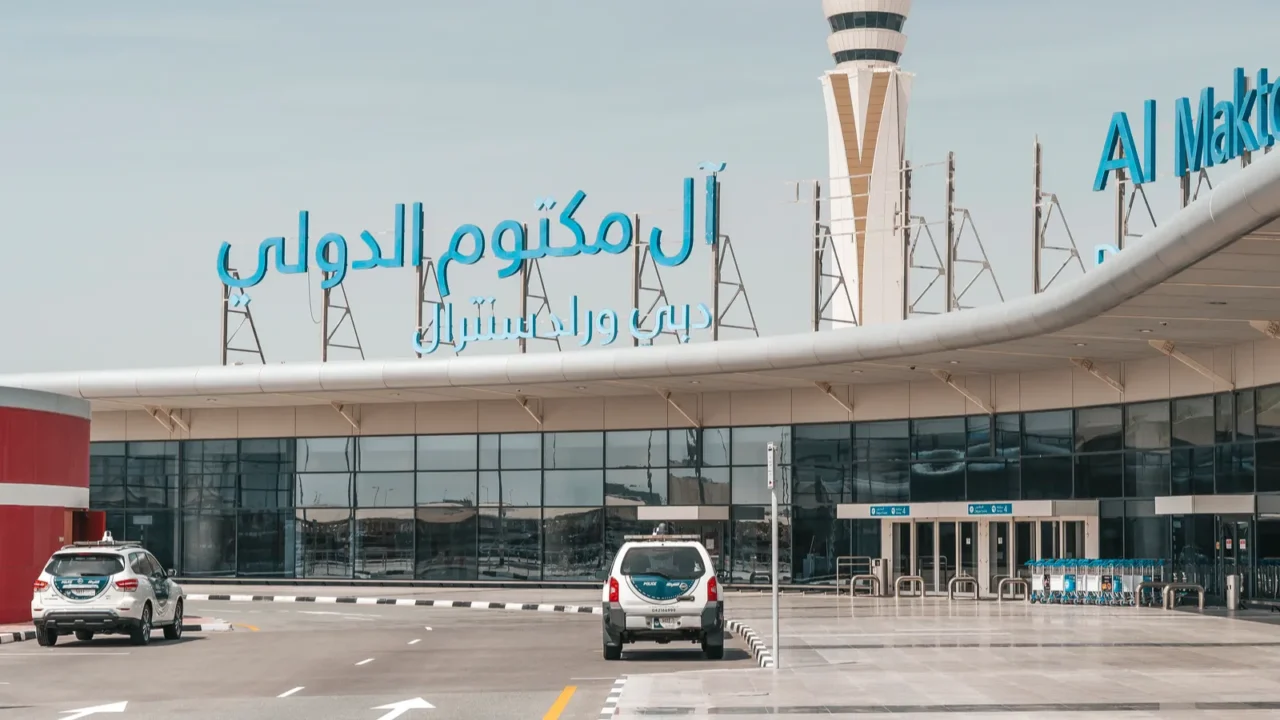
Dubai International Airport suspended operations on February 28 after the regional escalation forced major hubs to halt or sharply reduce flights. Emirates temporarily suspended services, and later disruptions saw Dubai bound flights turn back or divert to alternative airports as security alerts continued.
The airport began a cautious, phased reopening days later, with Emirates prioritizing passengers who already held existing reservations before accepting new bookings.
Europe feels it too
The inclusion of Copenhagen, Denmark, among Oman Air’s nine suspended routes revealed how far the disruption stretched beyond the immediate conflict zone. Oman Air halted its Muscat to Copenhagen service through March 22, 2026, because the corridor required transiting through closed or restricted airspace.
Lufthansa simultaneously suspended Frankfurt to Dubai, Beirut, and Oman routes. Air France halted Paris flights to Dubai and Riyadh through March 10. European carriers collectively found that the Gulf transit corridor they had increasingly relied on had abruptly vanished.
Millions left waiting
The scale of the crisis was staggering. Cirium aviation analytics tracked more than 51,000 scheduled flights in and out of the Middle East between February 28 and March 6, 2026. Of those, over 29,000 were canceled, representing a 56 percent disruption rate across all departing services.
Fact: On March 1 and 2, cancellation rates peaked at over 60 percent of all scheduled departures from the region, figures Cirium confirmed as among the highest single-region disruption rates ever recorded in commercial aviation history.
Muscat absorbs traffic
As the central Gulf corridor shut down, Oman’s airspace paradoxically absorbed a surge of rerouted international traffic. Carriers forced off the Gulf pathway began using the southern bypass running through Saudi Arabia and into Oman. Muscat International Airport moved to accepting scheduled flights only, restricting business aviation due to congestion.
British Airways added extra Muscat to London Heathrow repatriation flights specifically to help stranded passengers exit the region, underscoring Muscat’s unexpected role as a relief valve during the crisis.
Rerouting costs climb
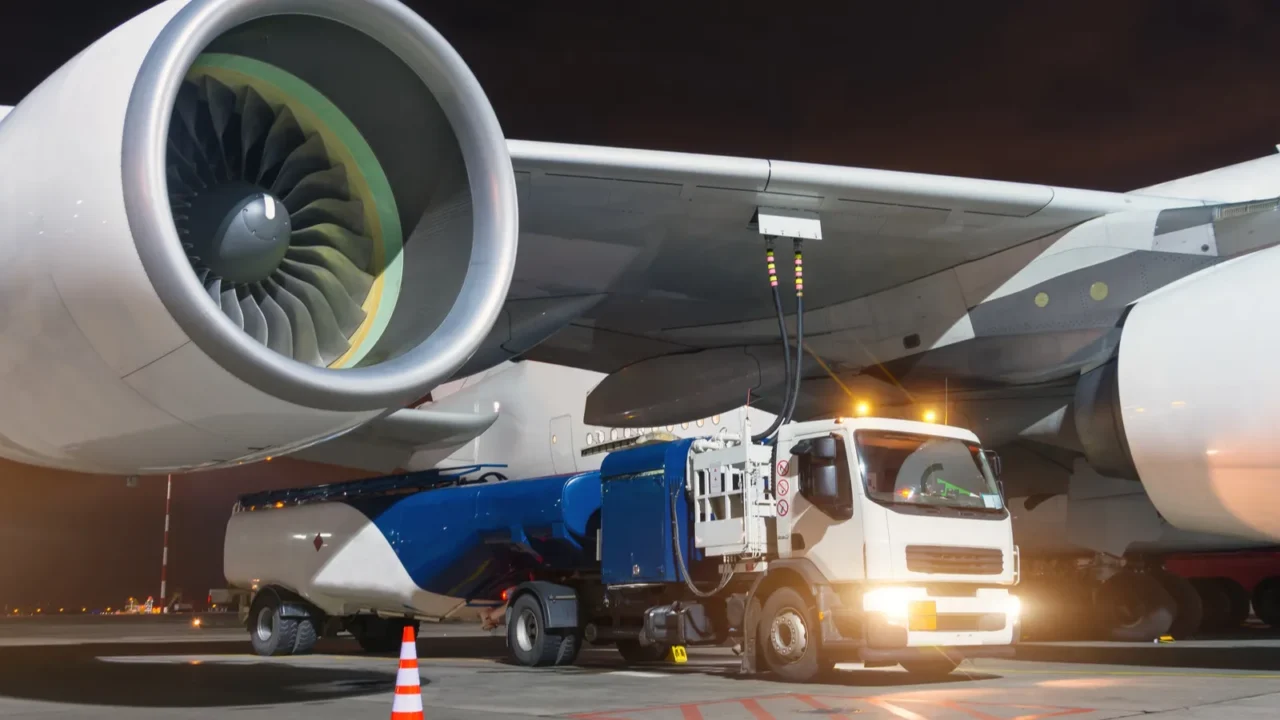
Every rerouted flight around the closed Gulf corridor carried a real financial cost. Bypassing the Gulf added hours of flight time, burned extra fuel, and reduced aircraft utilization rates. Aviation experts warned that sustained avoidance would pressure airline profit margins, particularly for carriers that had built their entire network models around the Gulf transit route.
Countries whose airspace was closed also immediately lost overflight fee revenue. Saudi Arabia and Oman, as the primary detour nations, absorbed a sudden, sharp spike in air traffic control demand.
Safety stays first
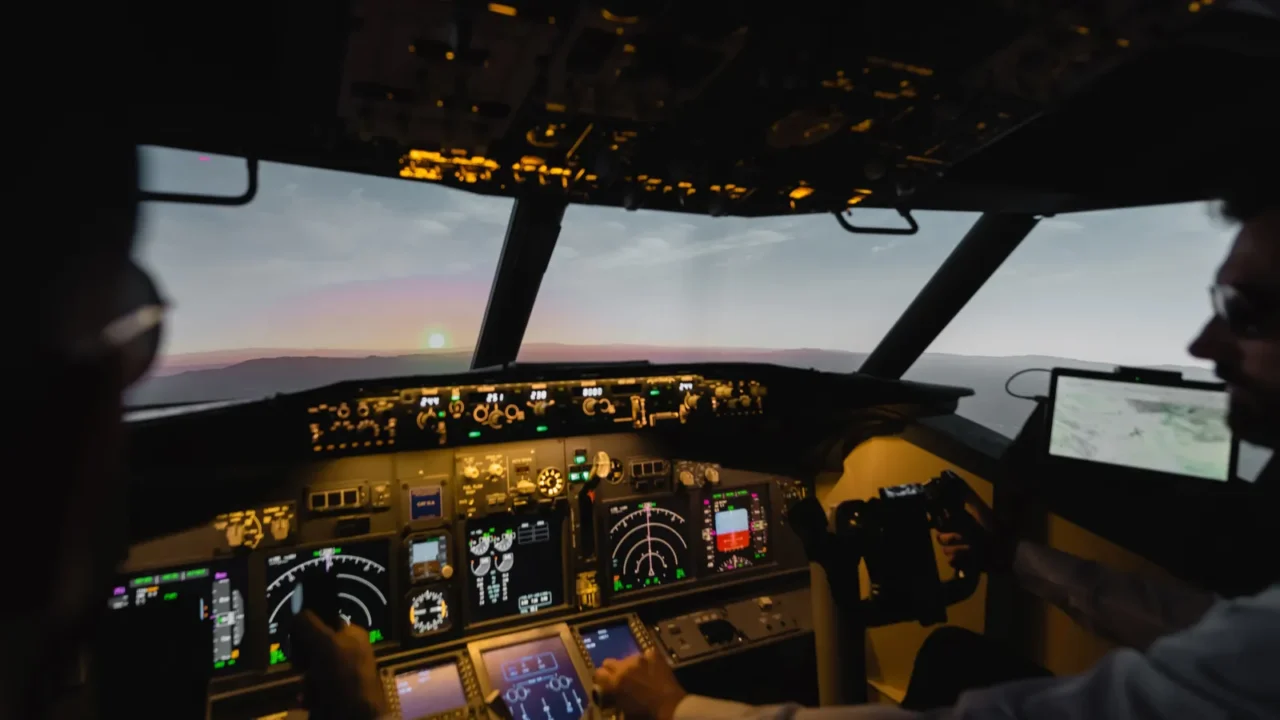
Every Oman Air announcement throughout the crisis carried a single consistent message: the safety of guests and crew is the airline’s absolute top priority. The carrier thanked passengers for their patience, acknowledged the disruption caused, and confirmed that suspensions would remain until conditions were verified safe by relevant aviation authorities.
Aviation analysts say Gulf carriers have had to build conflict-related contingency planning into normal operations because regional disruptions can escalate quickly. The latest crisis again showed how fast route networks, airport schedules, and passenger itineraries can unravel when airspace security deteriorates.
When will skies reopen?
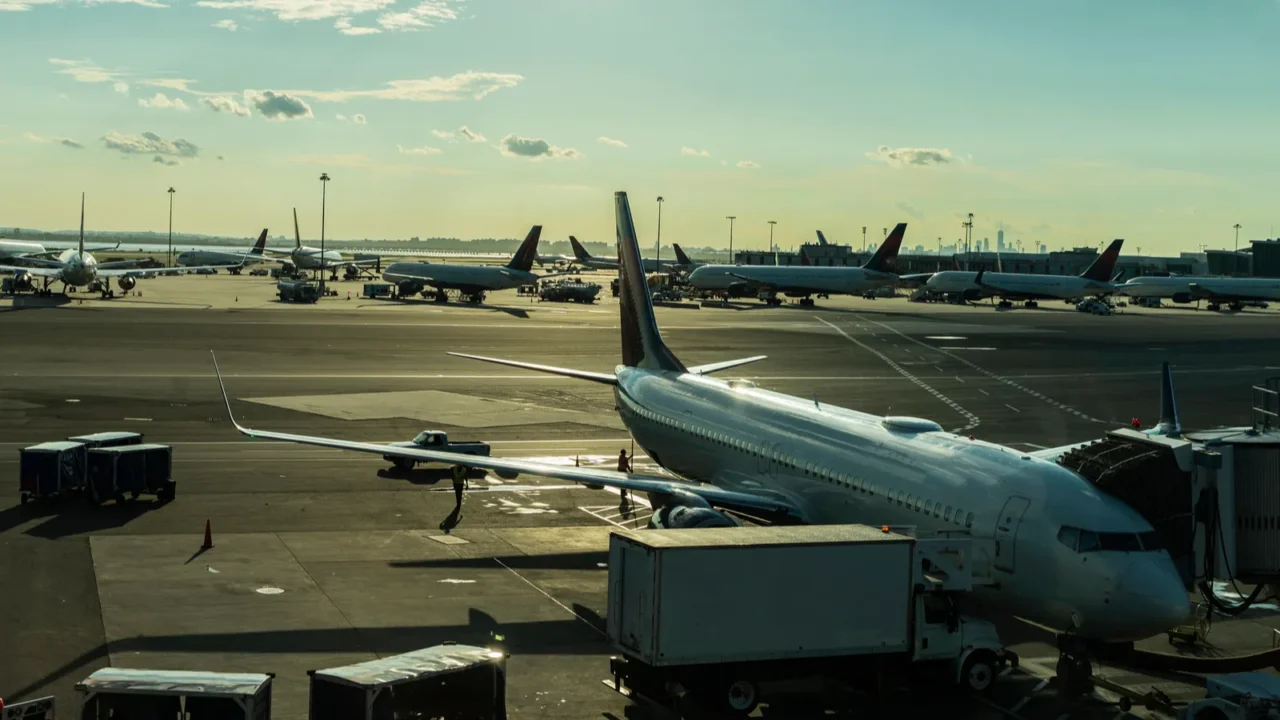
Oman Air’s route suspensions were scheduled through March 22, 2026, but the airline made clear that any extension or early restoration depends entirely on regional airspace conditions and official safety assessments. SalamAir maintained some suspensions as far out as March 28, with its Iraq, Lebanon, and Iran routes among the last reviewed.
As signs of stabilization emerged, Etihad resumed limited Abu Dhabi flights, and Emirates began a reduced Dubai schedule as a recovery timeline tied far more closely to global oil security than most travelers realize, and Oman Air advised all travelers to monitor omanair.com for the most current updates.
Nine destinations. Widespread airspace disruption. Thousands of travelers forced to rethink their plans. Was your flight one of them? Let us know in the comments.
This slideshow was made with AI assistance and human editing.
Don’t forget to follow us for more exclusive content right here on MSN.
Disclaimer: The images used are for illustrative purposes only and do not depict the actual locations mentioned.
Read More From This Brand:
