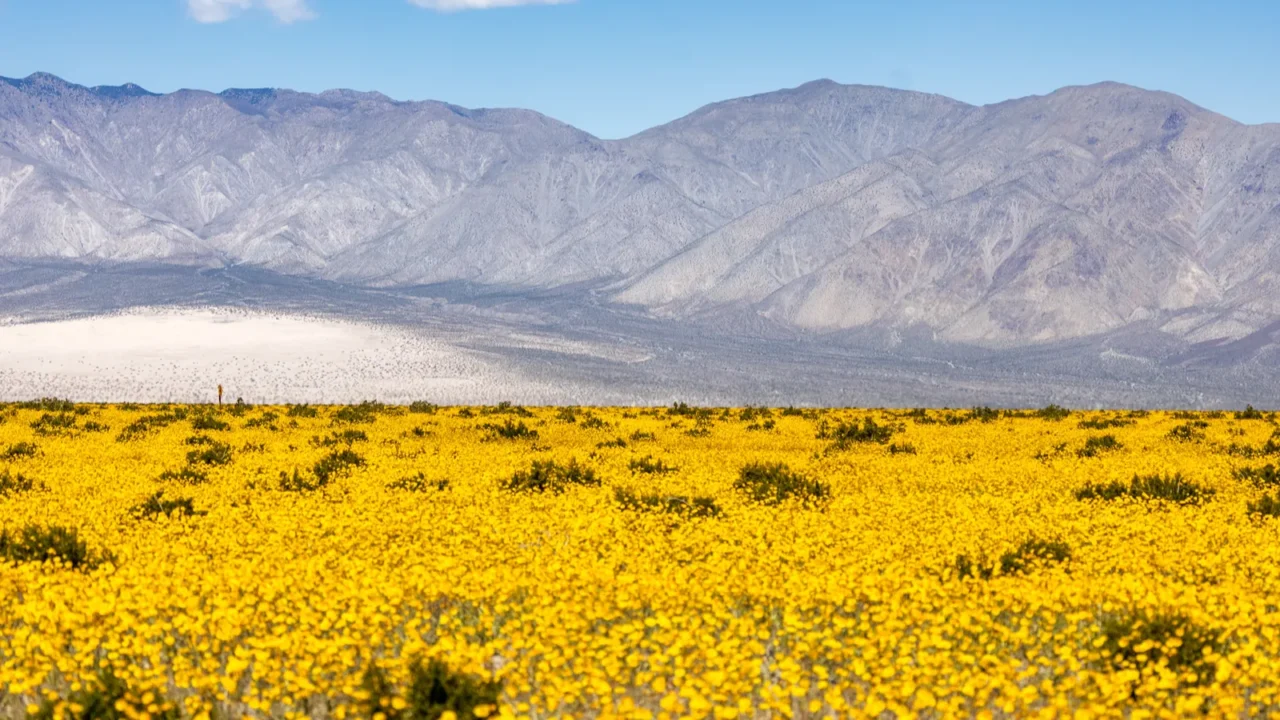
Death Valley is having a rare moment
Death Valley is famous for heat, salt flats, and bare rock, not fields of color. That is why this bloom matters right now: the park is seeing its best wildflower year since 2016, turning one of North America’s driest places into a major spring draw.
The timing matters too. The National Park Service says many low-elevation blooms were already past peak by March 16, while higher elevations are expected to keep flowering from April into June.
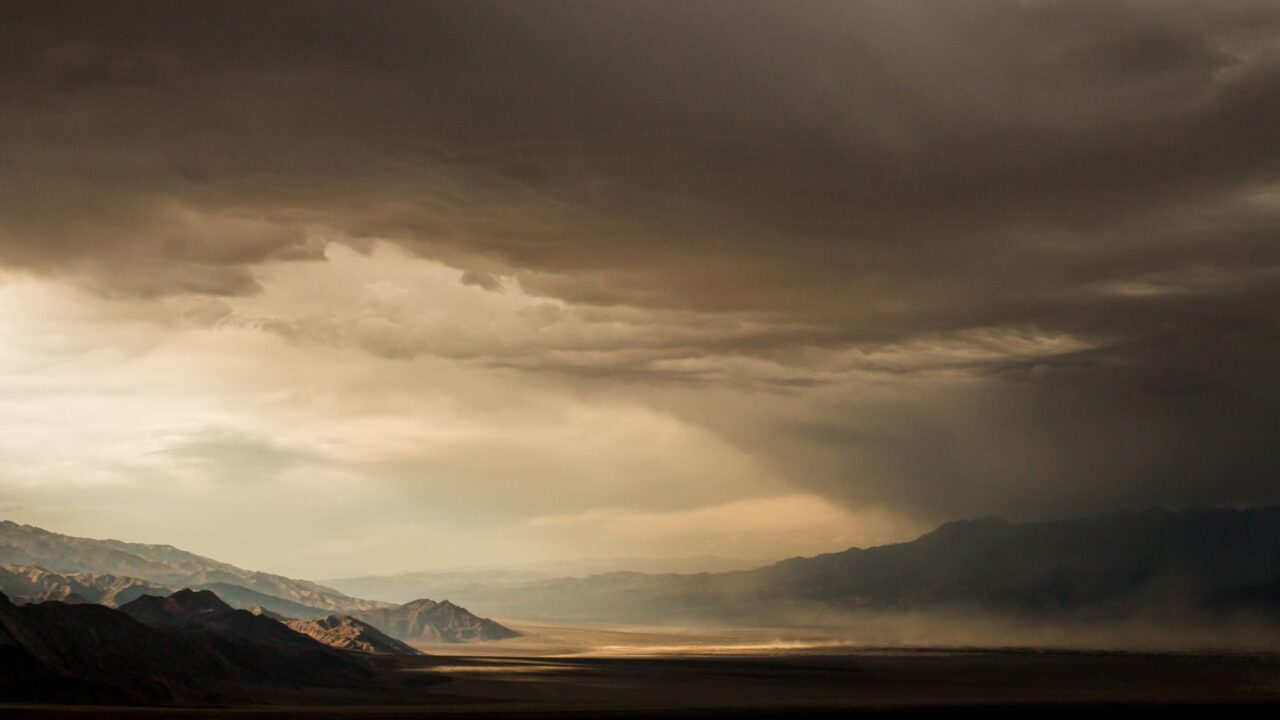
Record rain set this up
This burst of color did not happen by accident. Death Valley recorded 2.41 inches of rain from September through November 2025, which the park says was its wettest fall on record.
That total is a big deal in a place that usually gets about 2 inches of rain in a year. In other words, one fall season delivered more water than Death Valley often sees in twelve months.
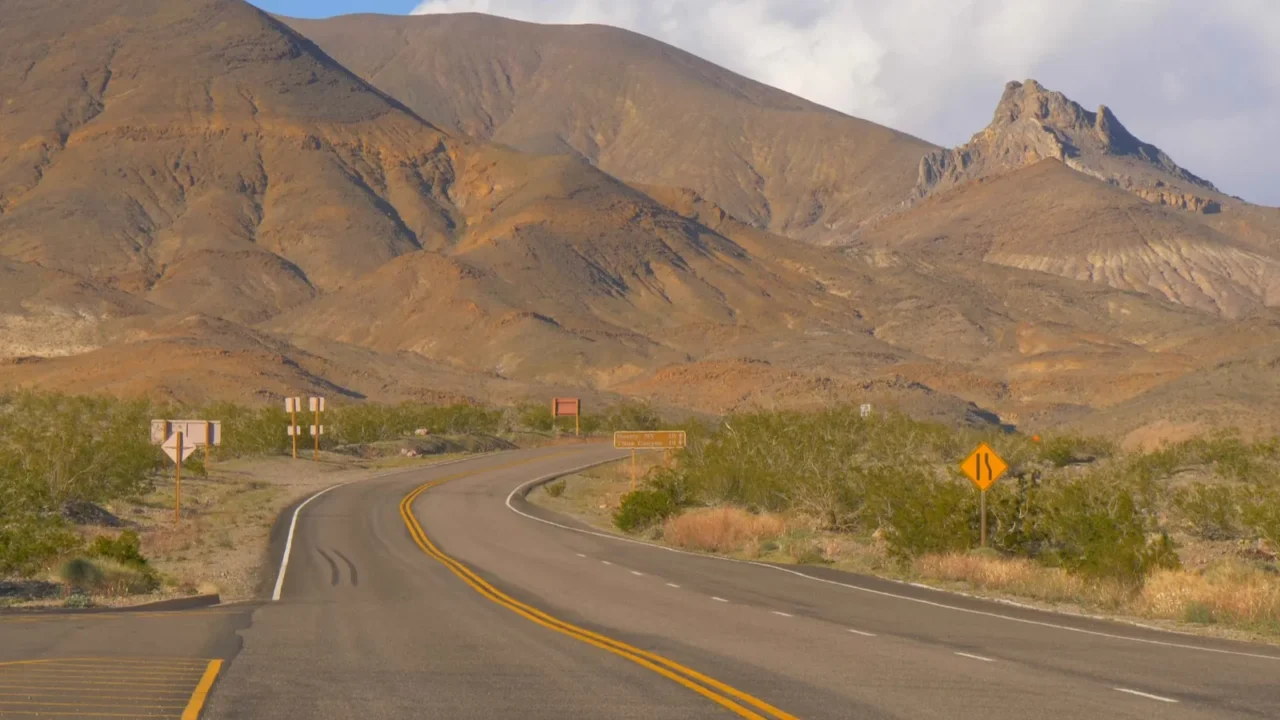
Why blooms are so rare here
Flowers need more than one rainy day to thrive in the desert. The park says strong wildflower years depend on well-spaced rainfall, enough sun, and a lack of drying winds that can wipe out young plants.
That balance is hard to get in Death Valley. The park can go a full year with no measurable rain at all, which helps explain why huge flower displays here are rare enough to become national news.
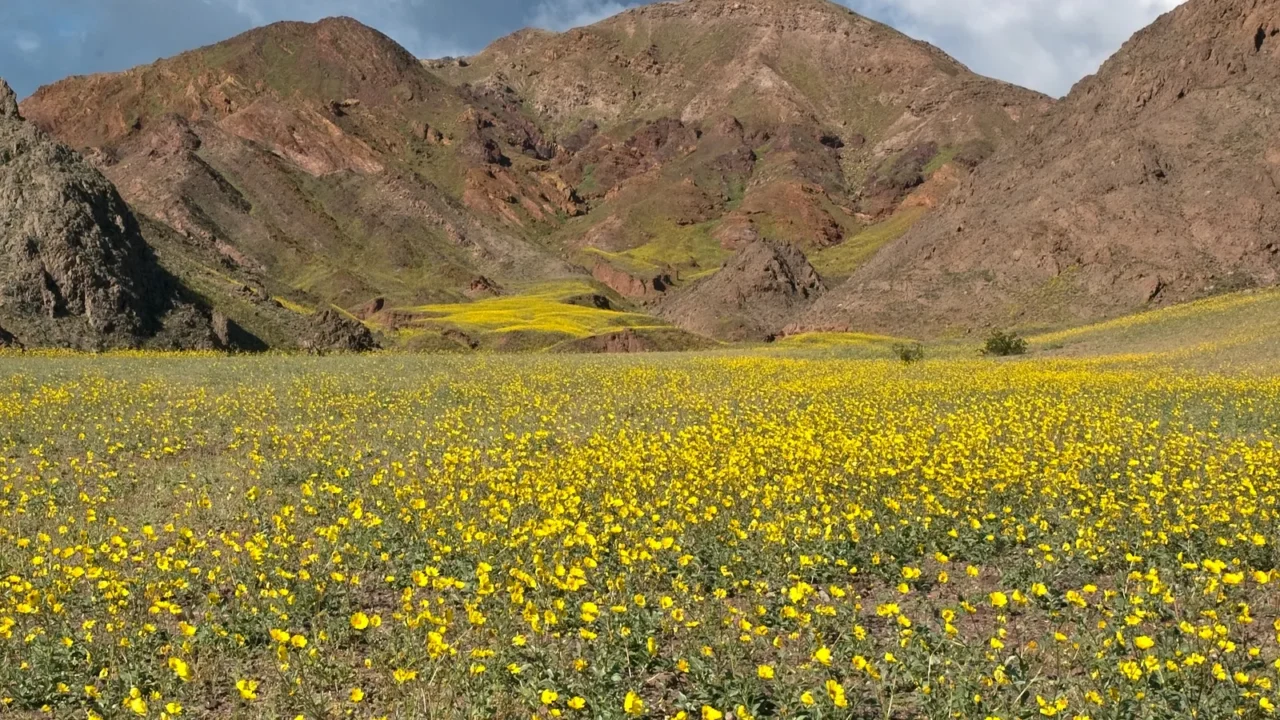
This is the best show in a decade
Park coverage and recent reporting agree on one point: this is the strongest bloom Death Valley has seen in about ten years. The last major bloom happened in 2016, and before that, one of the most memorable years was 2005.
That history gives this season real weight. A traveler who visited in most other recent springs would have seen scattered flowers, but not broad hillsides and roadside stretches lit up in yellow and purple.
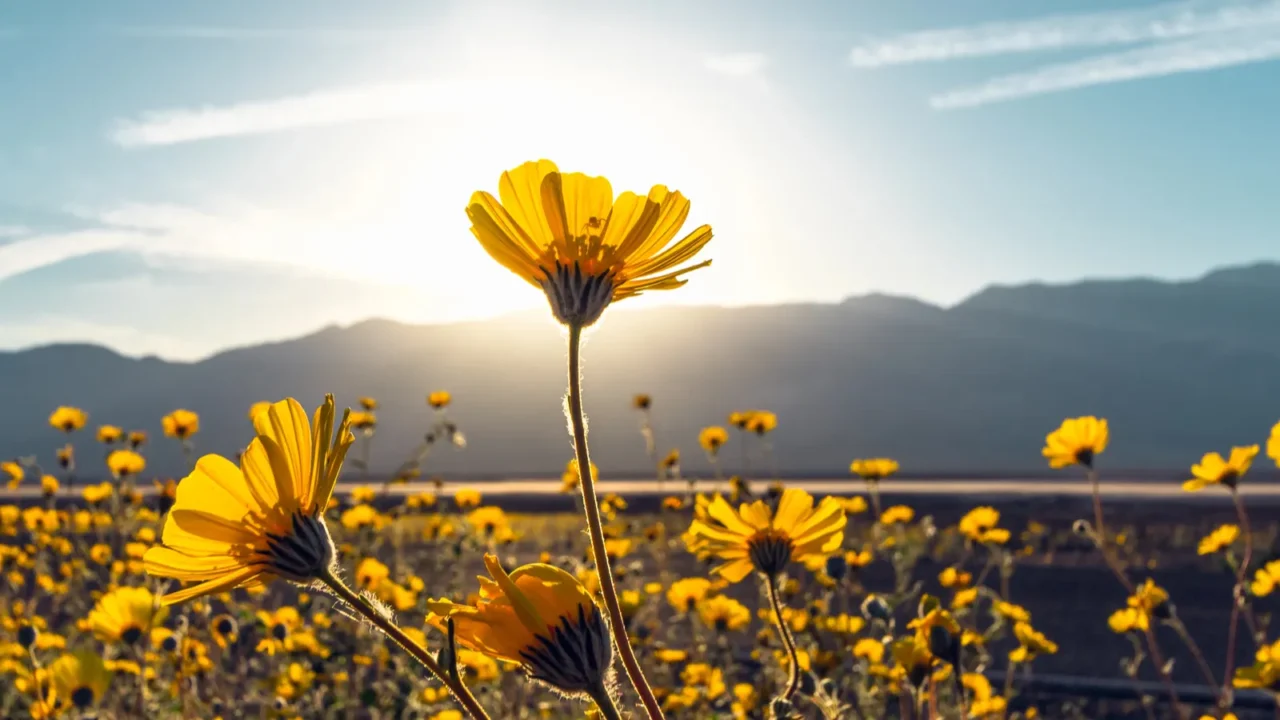
The valley floor is changing fast
The bloom is already shifting as March heat builds. According to the park’s March 16 wildflower update, many low-elevation areas are now setting seed after earlier yellow and purple displays along the valley floor.
That means timing matters more than headline buzz. Someone driving out from Los Angeles or Las Vegas this week may see a different show than a visitor who came earlier in March, especially around the hottest, lowest parts of the park.
Little-known fact: In 2024, record rainfall also helped revive Lake Manly at Badwater Basin, the lowest point in North America at 282 feet below sea level.

These are the roads to watch
Some of the park’s most active bloom areas are still easy to find by car. The National Park Service listed Badwater Road, Beatty Cutoff, and parts of Panamint Valley among the current bloom locations in its March 16 update.
Each area has a different mix of flowers. NPS says visitors may still find desert gold, phacelia, Mojave star, and gravel ghost depending on the road and elevation.
Little-known fact: November 2025 alone brought 1.76 inches of rain in Death Valley, breaking the previous November record of 1.70 inches set in 1923.
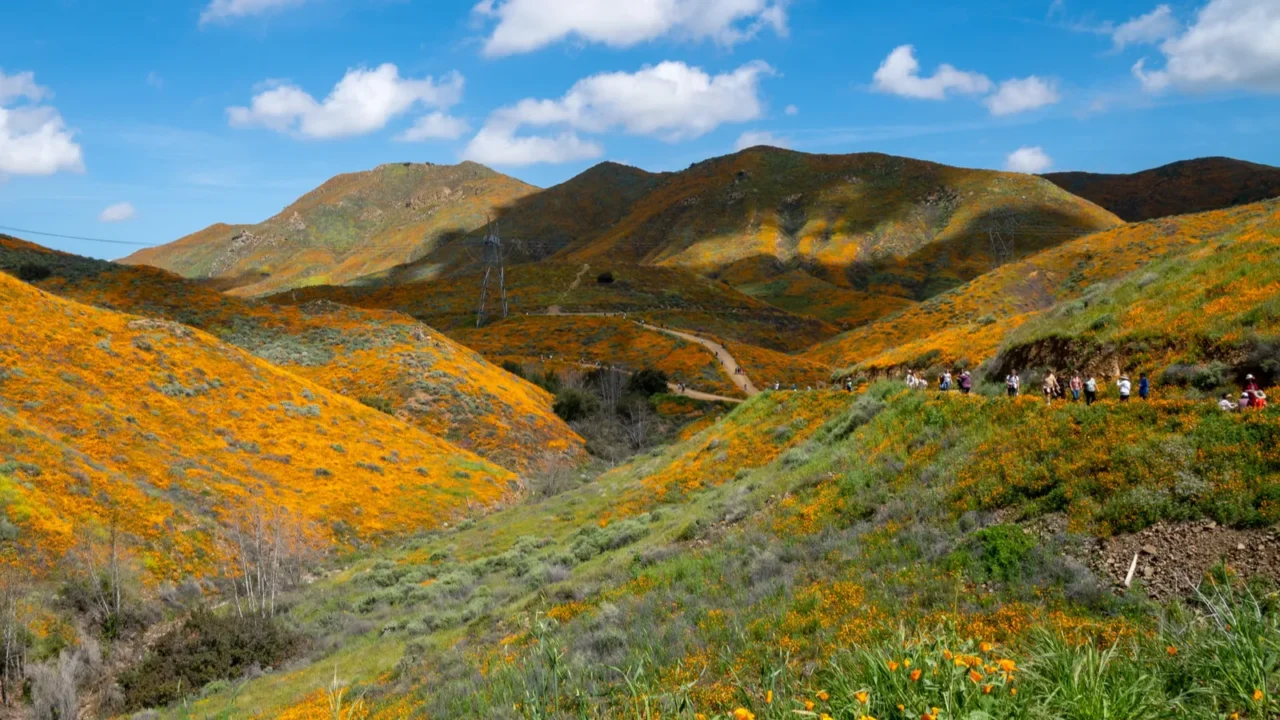
Higher elevations are now the story
The next phase of the season is moving uphill, just as seen in Walker Canyon in California. While the valley floor fades, the park says higher elevations should bloom from April through June, though those flowers tend to appear in smaller clusters between shrubs rather than huge carpets of color.
That changes how visitors should think about the trip. The best views may soon come from mountain roads, canyon areas, and cooler slopes rather than the classic low-desert pullouts near Furnace Creek.
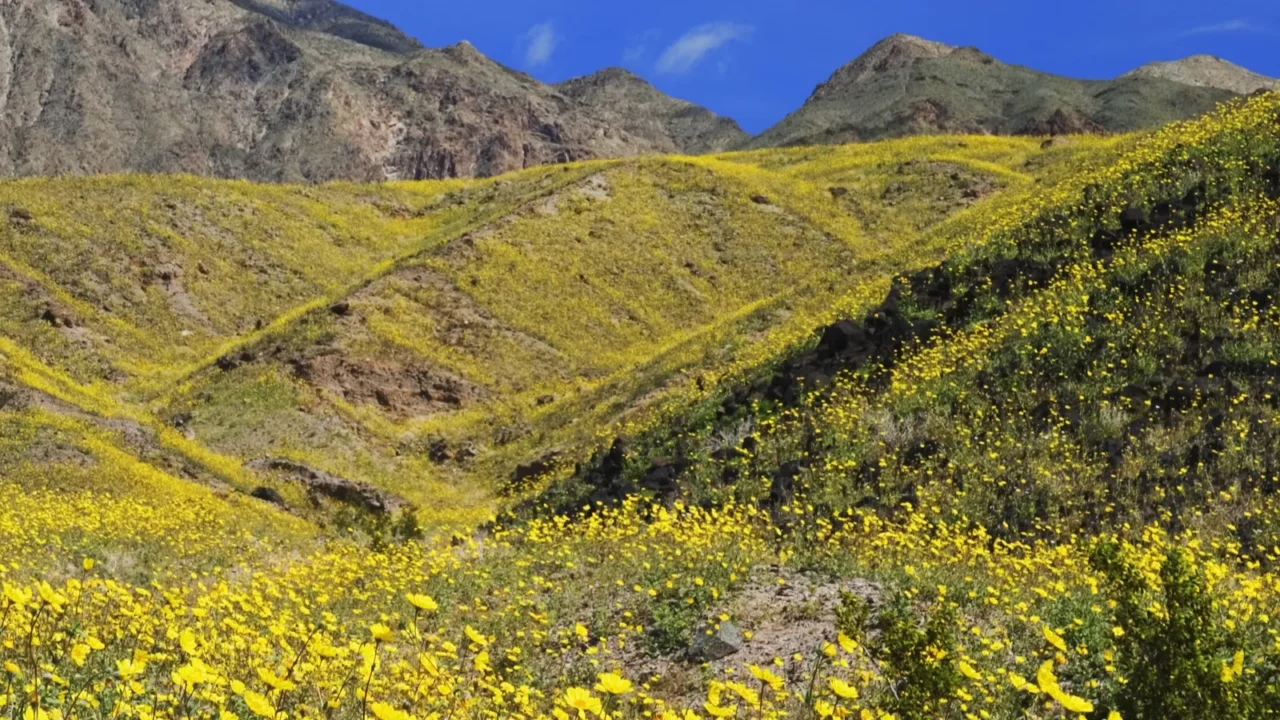
Desert gold steals the spotlight
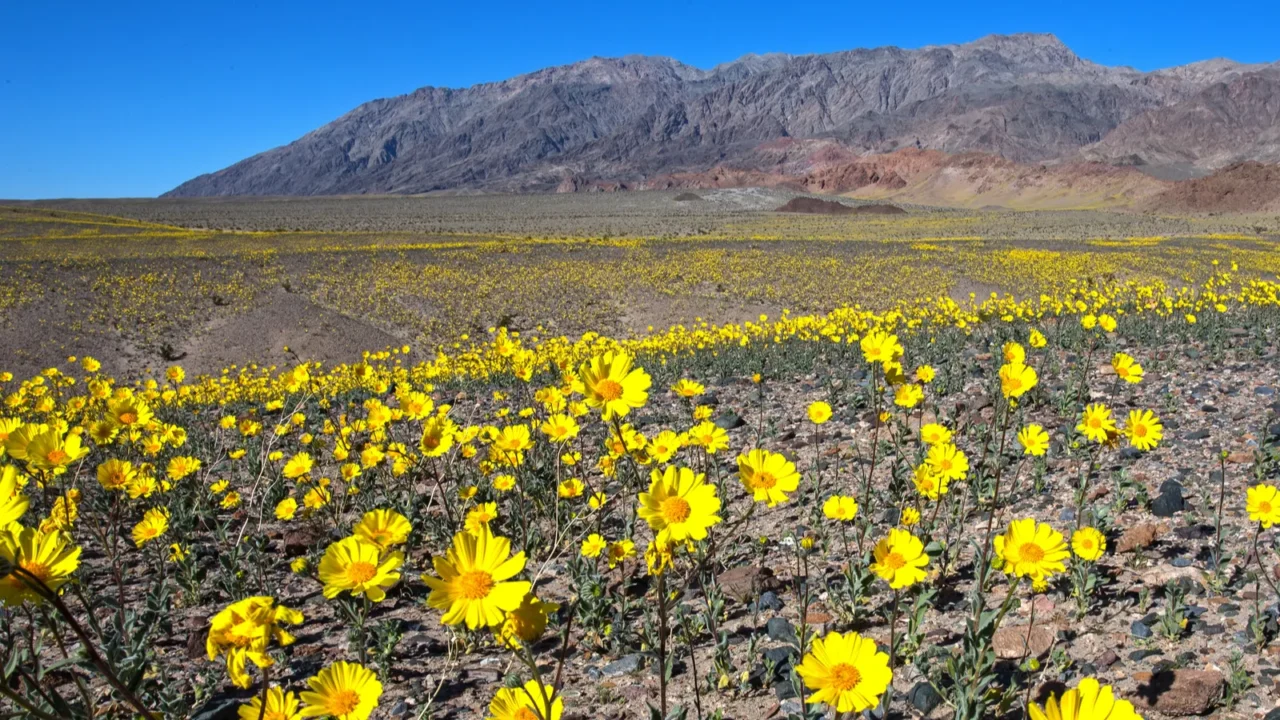
One flower is doing much of the visual work this year. Recent reporting from Death Valley described desert gold as the park’s most common wildflower, with hillsides near Furnace Creek washed in yellow.
But the bloom is not just one color. Reports from the park and news outlets also point to pink, purple, and white species that reward slower looking, especially when visitors step out at safe pull-offs and scan the ground closely.
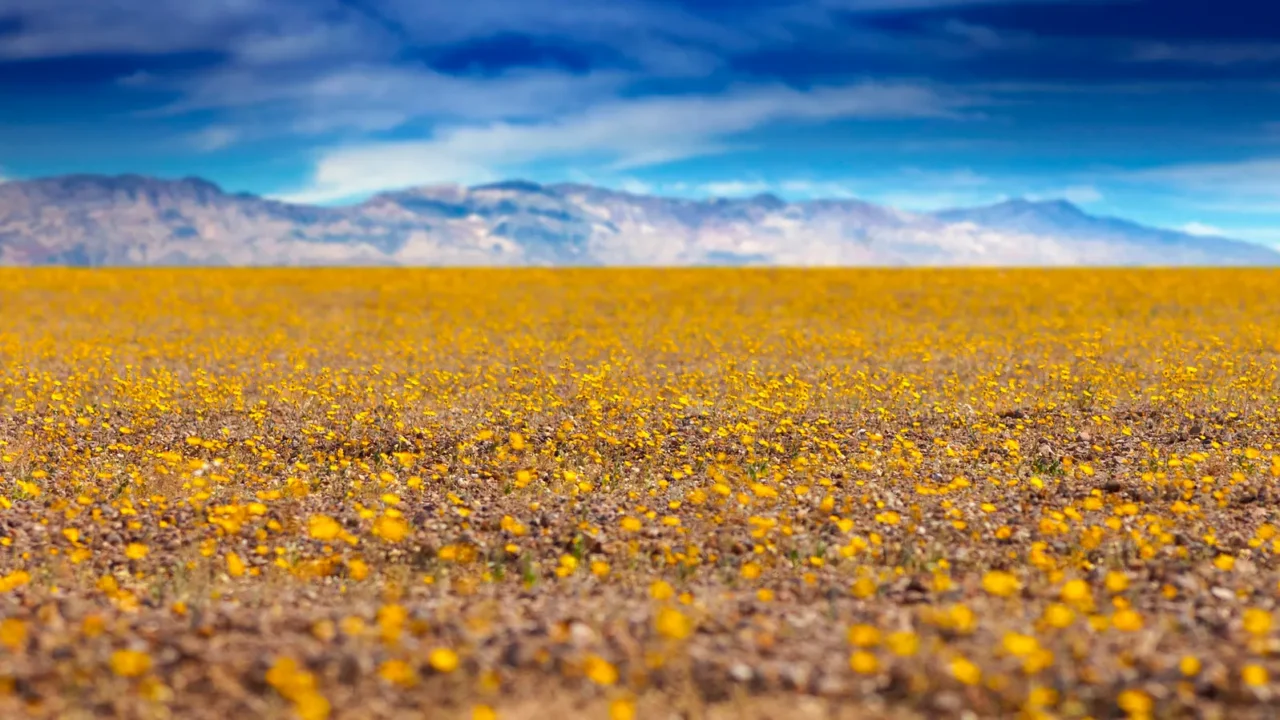
Social media can distort the view
The bloom is real, but online photos can still give the wrong impression. Recent reporting from the park area warned that people sometimes arrive expecting every inch of Death Valley to look like a flower carpet, when the desert still has far more rock than blossoms.
That is an important reality check for travelers. This is not a theme park display with one perfect view everywhere, but a rare natural event that appears in patches, roadsides, slopes, and pockets that change week by week.
Crowds are part of the story too
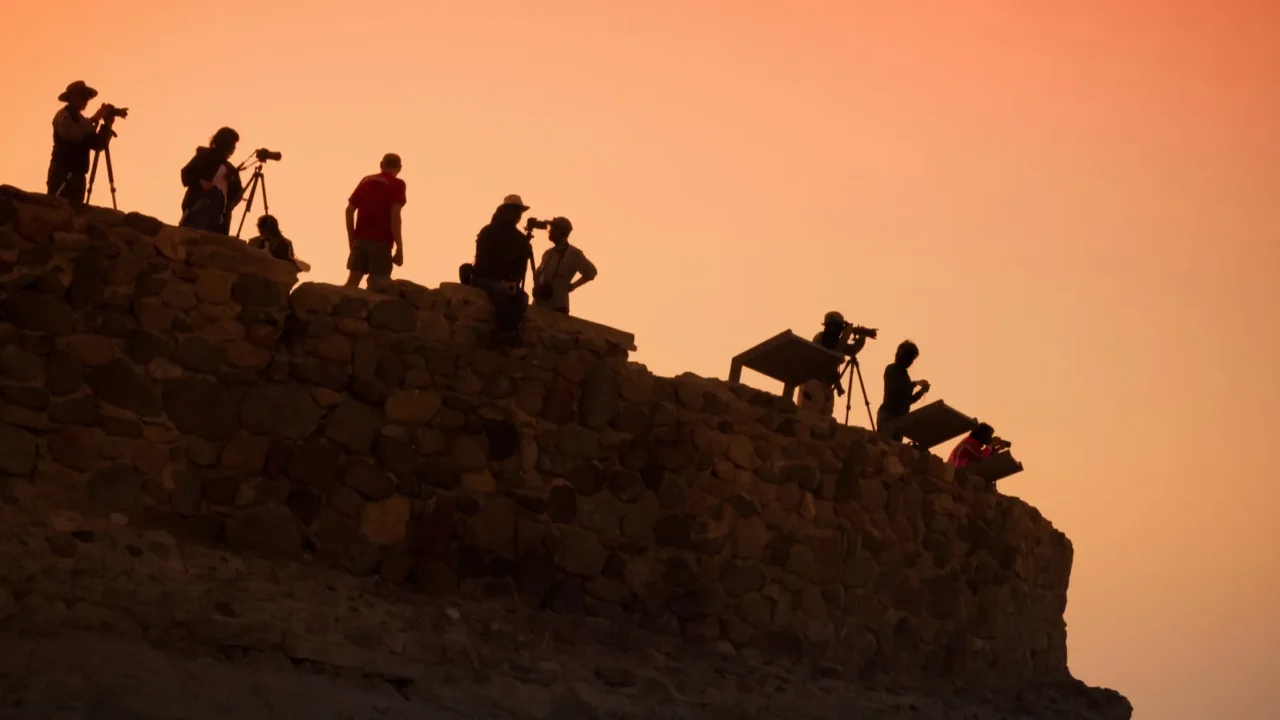
This bloom is not just changing the landscape. It is also drawing extra visitors into a remote park that already sits on one of the West’s most popular driving routes, about two hours from Las Vegas.
That creates a very practical travel issue. The park and travel outlets have advised people to go on weekdays, arrive early, download offline maps, and prepare for limited cell service and heavy roadside stopping near the best-known bloom zones.
The flowers are shaping the future
A bloom year is not just a one-season spectacle. As flowers fade, they drop seeds back into the soil, helping set up future displays that may not arrive again for years.
That seed bank is one reason these events feel dramatic when conditions line up. Dormant seeds can wait through long dry stretches, then respond quickly when the desert gets enough moisture at the right time.
This bloom reaches beyond one park
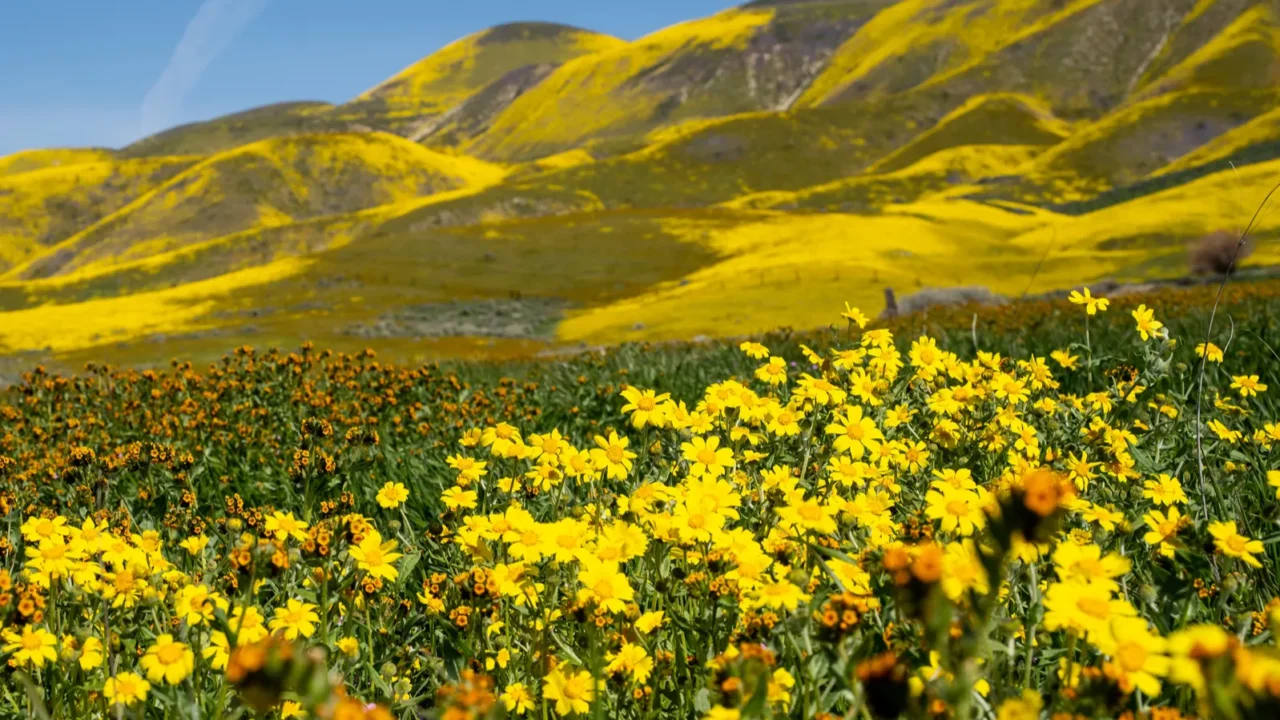
Death Valley is getting the headlines, but it is not the only Southern California landscape benefiting from the wet season. Recent coverage noted healthy blooms in places like Anza-Borrego Desert State Park and Carrizo Plain National Monument as well.
Still, Death Valley stands apart because of how rarely it erupts at this scale. In a park known for extremes, a widespread bloom carries more shock value than it would in greener parts of California.
Locals say California’s most haunted desert holds eerie landmarks, whispered legends, and strange spots many visitors never notice. Check out the hidden stories that reveal why this mysterious stretch of desert still grips ghost hunters, history lovers, and curious travelers.
Visitors can ruin what they came to see
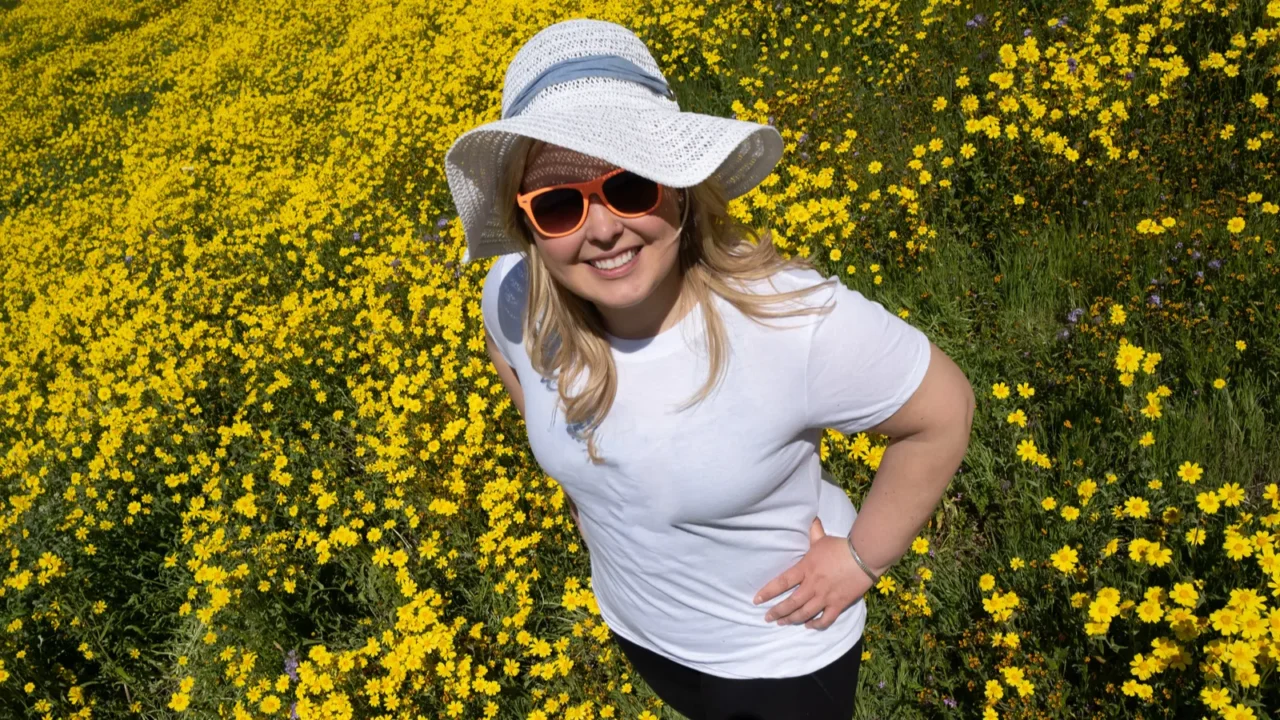
A superbloom is fragile, and foot traffic can do real damage. The National Park Service urges visitors not to pick flowers or walk through bloom fields, because trampling can crush plants and destroy the seed set that future bloom years depend on.
That makes basic visitor behavior part of the story. Staying on roads, pullouts, and designated paths is not just park etiquette; it is the difference between enjoying a rare event and shortening its life.
See which U.S. road trip routes Americans are searching for most in 2026 and what is making these drives stand out this year.
If you had the chance to see this rare Death Valley bloom in person, would you go now for the last low-elevation color or wait for the higher-elevation flowers of April and May? Share your thoughts and your view in the comments.
This slideshow was made with AI assistance and human editing.
Don’t forget to follow us for more exclusive content right here on MSN.
Read More From This Brand:
