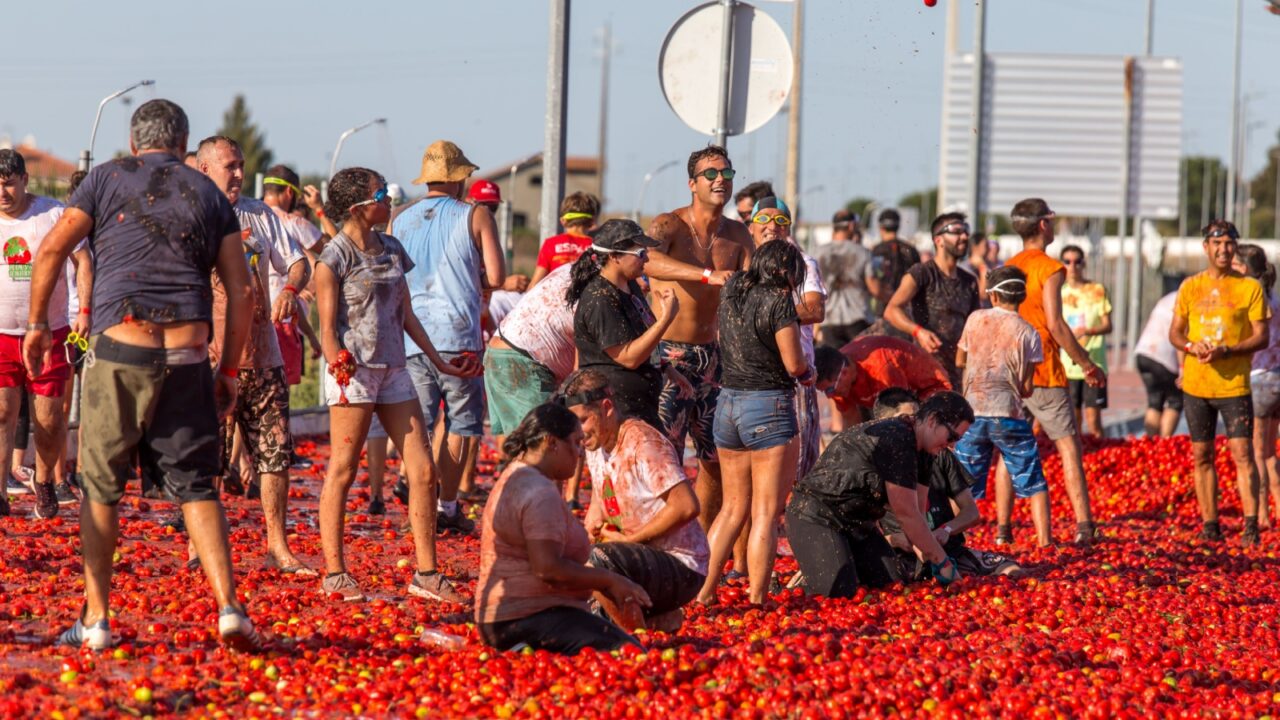
A town turns red
Once a year, a quiet Spanish town explodes into pure, joyful chaos that stains streets bright red. What begins as an ordinary summer morning quickly becomes one of the wildest scenes in global travel culture. This messy tradition sparks curiosity instantly, so let’s dive in!
The festival takes place in Buñol, a small town near Valencia that few travelers knew before tomatoes took over. In just one hour, tons of tomatoes reshape the town’s identity and global reputation. What follows is a story of chance, culture, and celebration.

Where it all happens
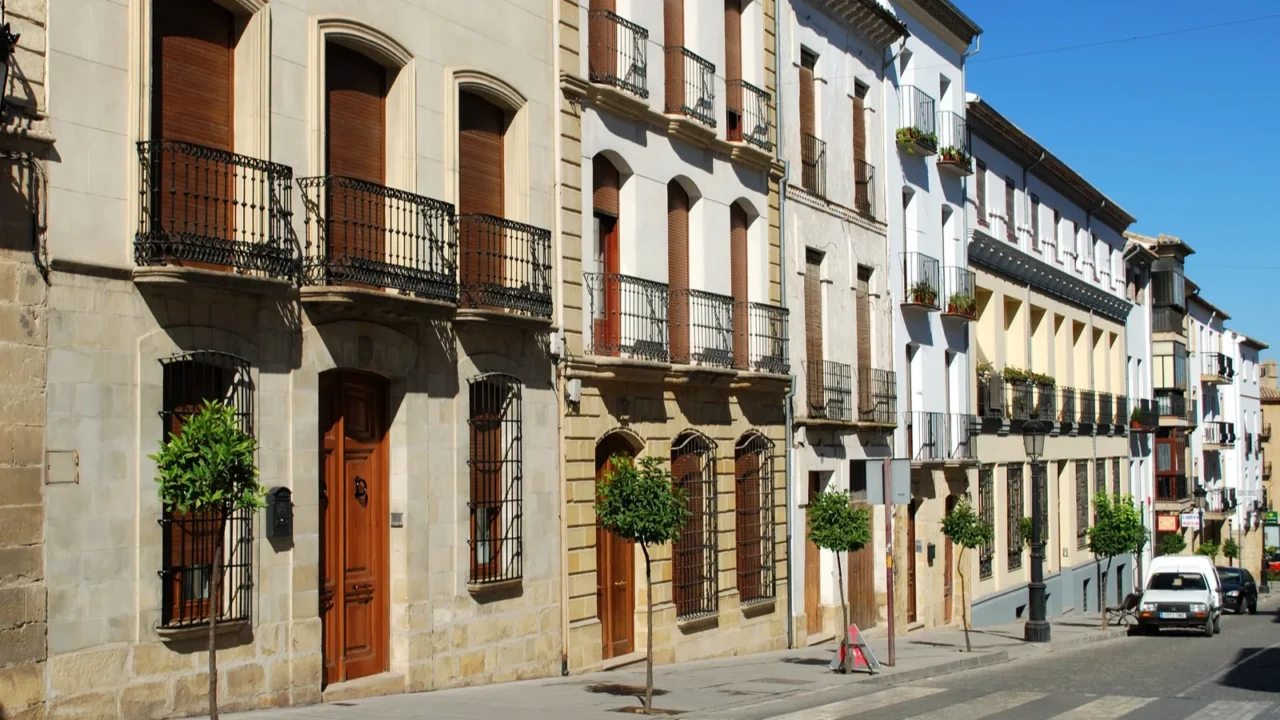
Buñol sits about 25 miles west of Valencia, surrounded by hills and narrow streets. On most days, it feels calm, residential, and deeply local in character. During La Tomatina, it transforms into a global gathering point.
Visitors arrive from Europe, Asia, and the Americas, filling plazas and balconies before sunrise. The town’s compact layout makes the experience intense and immersive from every angle. Every street becomes part of the spectacle.
An accidental beginning
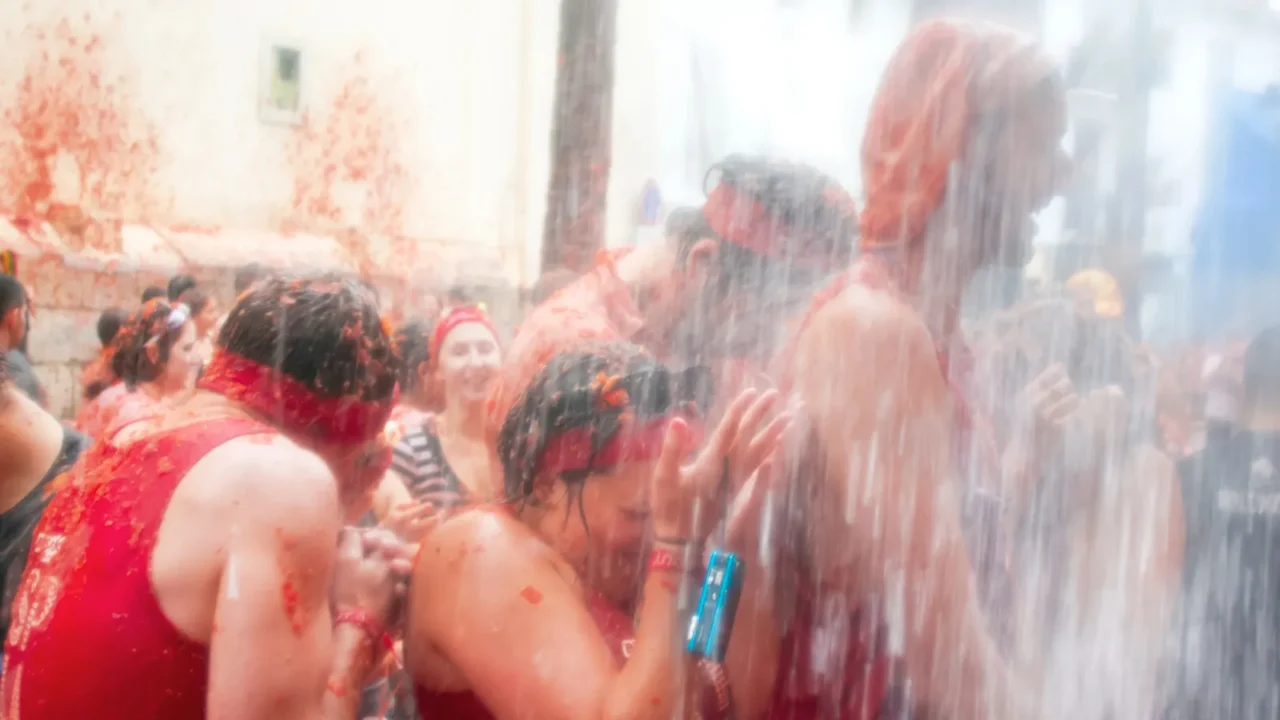
La Tomatina began in 1945, not as a planned festival but as a spontaneous food fight. During a local parade, young people grabbed tomatoes from a nearby stall and started throwing them. The moment was chaotic, playful, and completely unplanned.
Instead of fading away, the idea stuck in local memory. Residents repeated it the following year, even without official permission. What started as mischief slowly became tradition.

From banned to beloved
Local authorities initially banned the tomato fight, seeing it as disruptive and wasteful. For several years, the event disappeared and reappeared in quiet acts of rebellion. Residents even staged a mock tomato funeral to protest the ban.
That protest worked, and the festival returned officially in the 1950s. Clear rules were introduced to keep things safe and organized. La Tomatina was finally embraced by local authorities as part of the town’s culture.
Why tomatoes were chosen
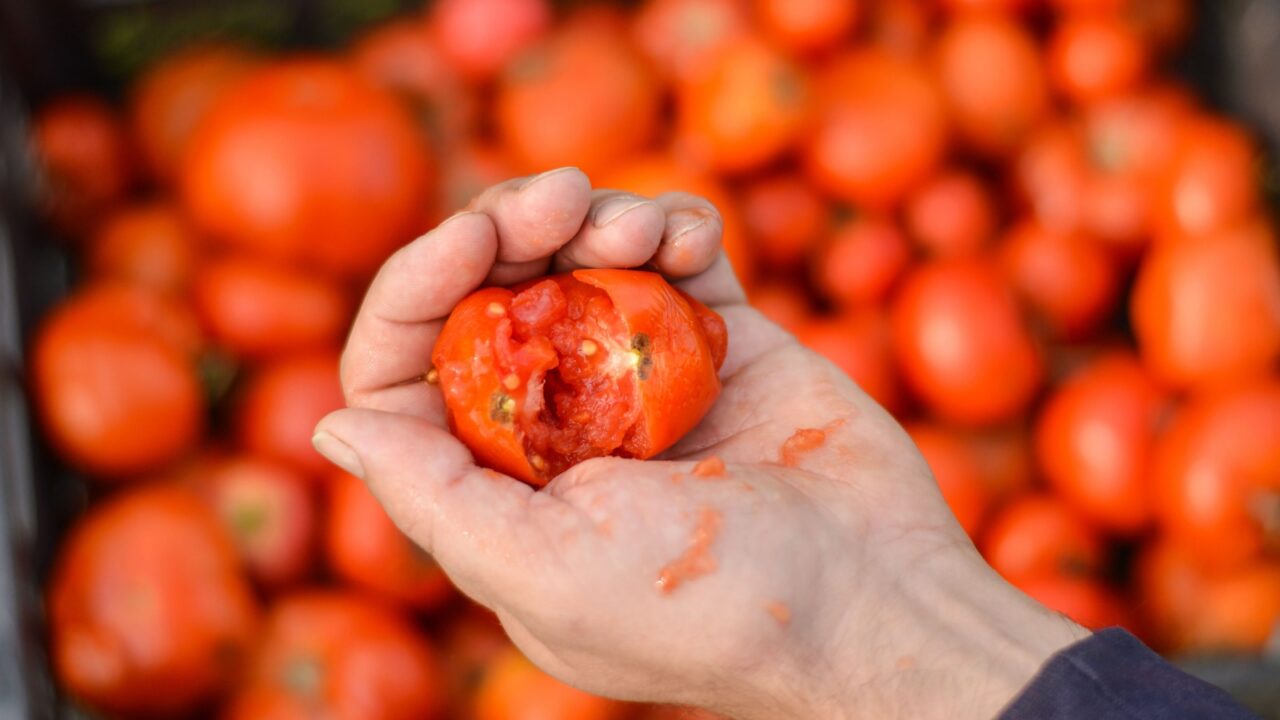
The tomatoes used are not premium produce meant for dining tables. They are overripe tomatoes grown specifically for the festival and unsuitable for sale. Their softness makes the event safer and easier to clean.
Spain’s strong agricultural supply makes sourcing them practical and affordable. Using surplus tomatoes also reduces unnecessary food waste. The choice is messy but surprisingly thoughtful.
How the festival works
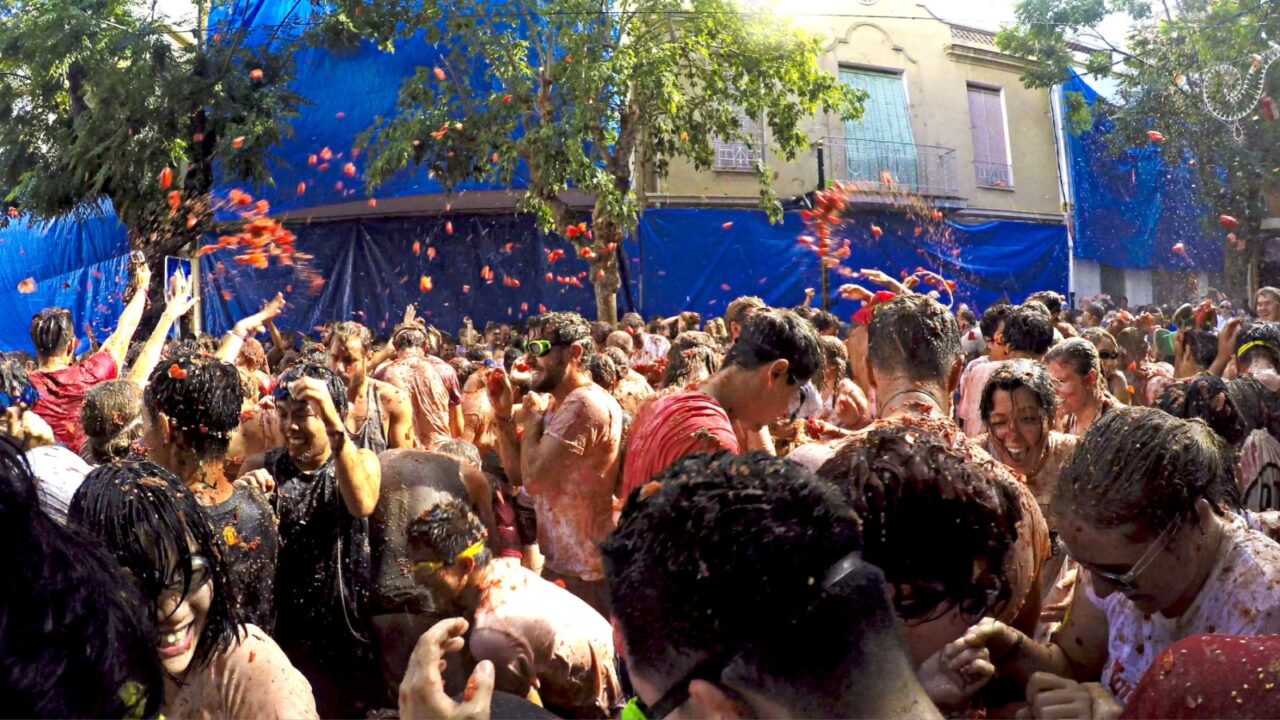
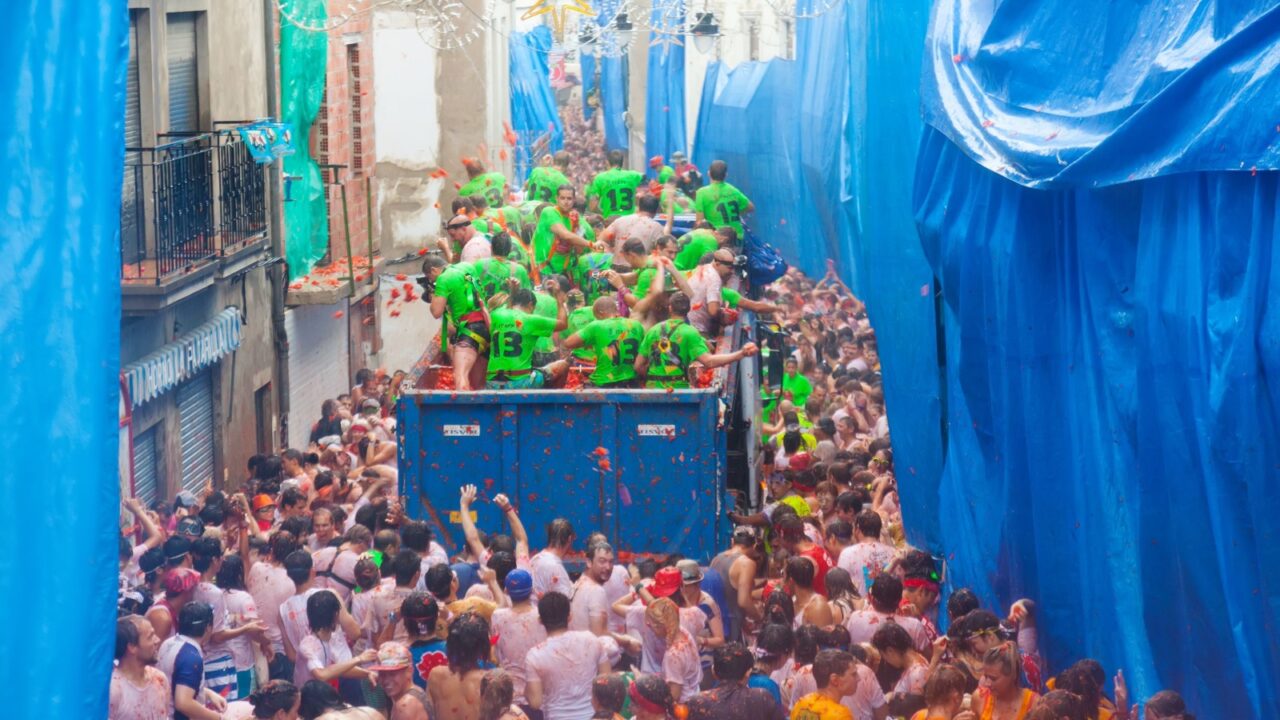
The event happens on the last Wednesday of August each year. It begins with a signal when a truck releases the first wave of tomatoes into the crowd. From that moment, chaos is fully unleashed.
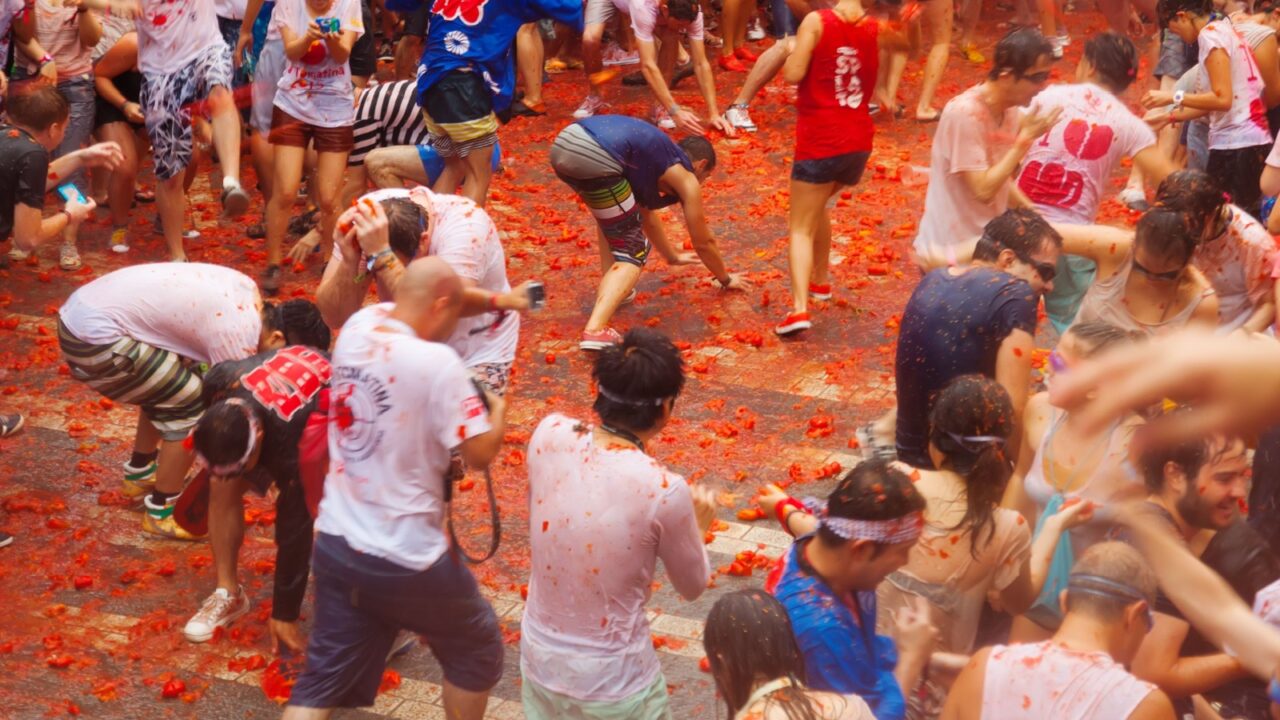
The fight lasts exactly one hour, no more and no less. When the final signal sounds, throwing stops immediately. Streets are left covered in red pulp and laughter.
Rules behind the chaos
Despite appearances, La Tomatina follows strict rules. Tomatoes must be squashed before throwing to prevent injuries. Bottles, hard objects, and aggressive behavior are strictly forbidden.
Participants are encouraged to wear goggles and old clothes. Respect for others is a core part of the experience. Order exists even inside the madness.
A global travel magnet
La Tomatina became internationally famous in the late twentieth century. Photos of tomato-soaked crowds spread across newspapers and travel magazines. Social media later amplified its reach even further.
Today, tickets sell out quickly, with attendance capped to protect the town. Travelers plan entire Spain itineraries around this single event. Buñol’s name now resonates worldwide.
Impact on local economy
The festival brings a massive economic boost to Buñol and nearby Valencia. Hotels, restaurants, and transport services see peak demand during festival week. Local vendors benefit from global foot traffic.
Municipal planning ensures cleanup happens within hours. Fire trucks wash the streets using water, and the leftover pulp is quickly cleared with help from local crews. The town returns to normal almost overnight.
More than just mess
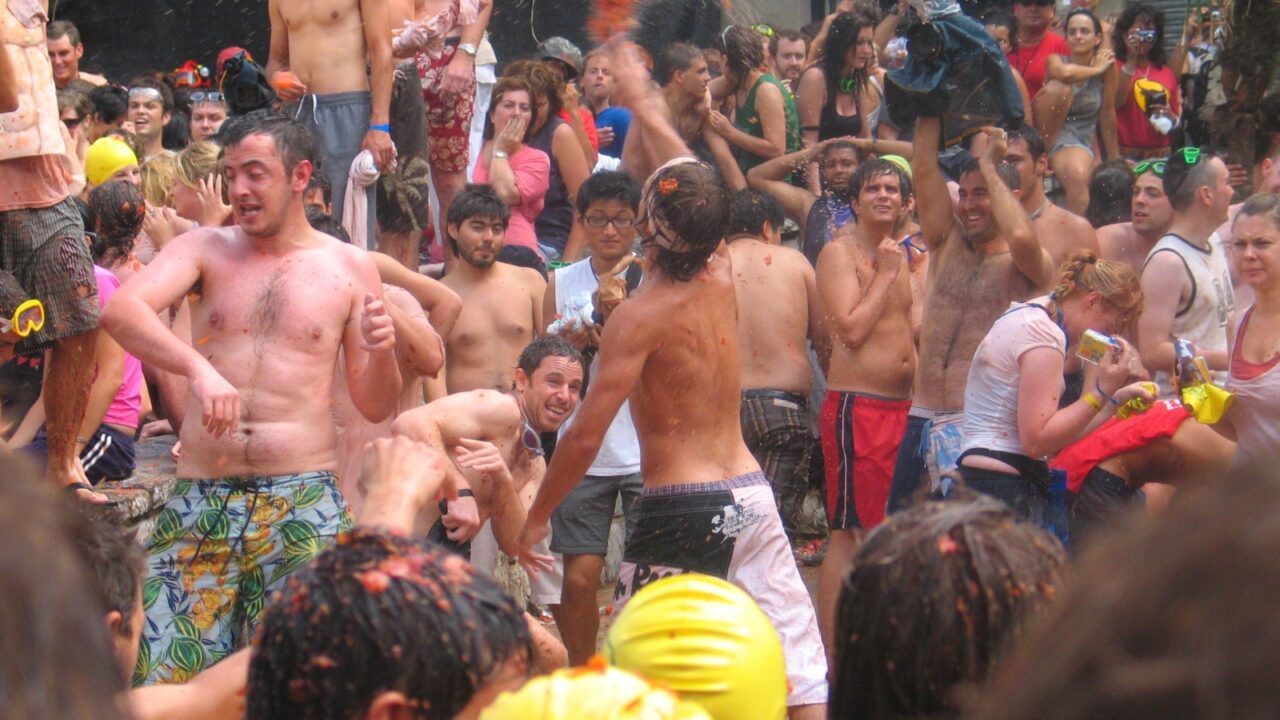
For locals, La Tomatina represents community pride and shared identity. Families volunteer, balconies open, and streets belong to everyone for a day. It is less about chaos and more about connection.
The festival also reflects Spain’s love for public celebration. Food, humor, and togetherness define many Spanish traditions. La Tomatina fits naturally into that cultural rhythm.

Planning the experience
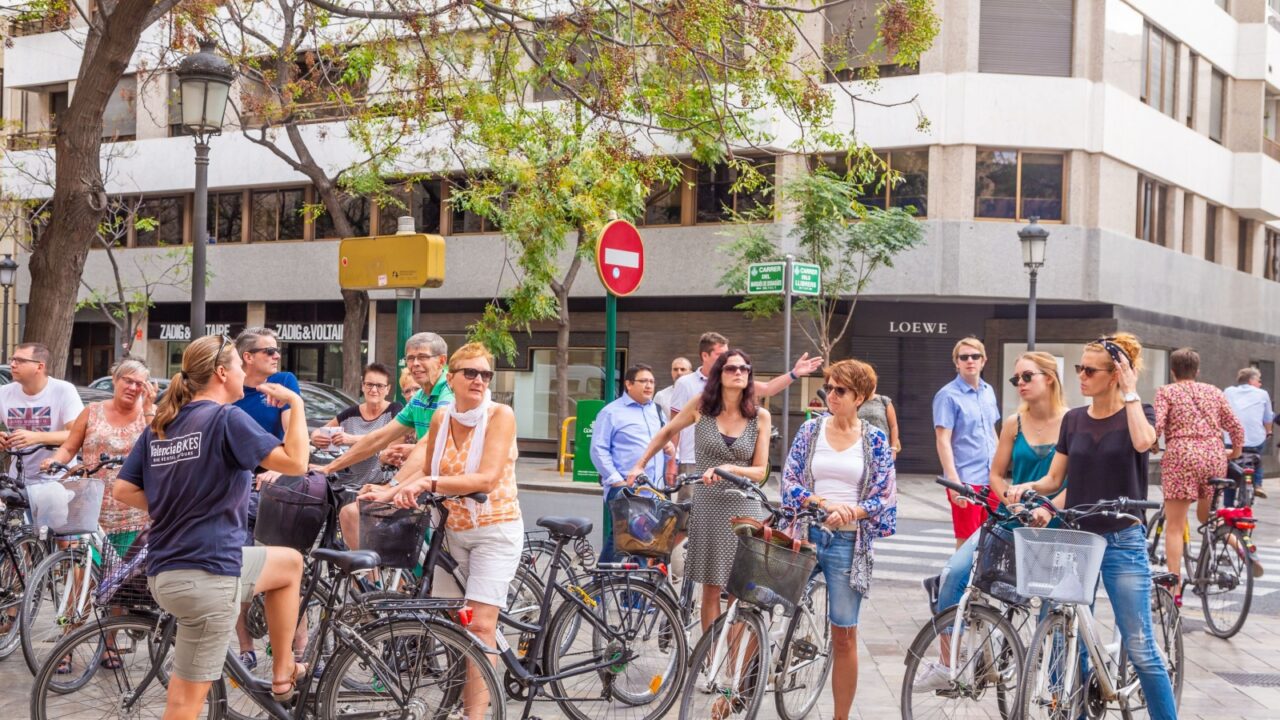
Most travelers stay in Valencia, which offers beaches, nightlife, and easy transport to Buñol. Trains and buses run early on festival morning. Packages often include entry tickets and transportation.
Arriving prepared makes a huge difference. Waterproof phone covers and closed shoes are essential. Simple planning turns chaos into pure enjoyment.
Why it still matters
In a world of curated travel experiences, La Tomatina remains raw and unscripted. It invites people to let go of control and embrace playfulness. Moments like this help travelers experience the heartbeat of a culture through festivals.
The festival proves that traditions do not need elegance to be meaningful. Sometimes, joy comes covered in tomato pulp. That honesty keeps people coming back.
A messy legacy lives on
La Tomatina has turned a small Spanish town into a symbol of joyful absurdity. It blends history, community, and travel in one unforgettable hour. Few festivals leave such a vivid memory behind.
The world’s messiest celebration continues to inspire curious travelers each year. Some trips are remembered for beauty, others for emotion and laughter. Would joining a tomato-soaked street festival make the travel bucket list? Share your thoughts below.
This slideshow was made with AI assistance and human editing.
Don’t forget to follow us for more exclusive content right here on MSN.
Read More From This Brand:
