U.S. minimum wage landscape overview
The Economic Policy Institute reports that millions of workers in the United States will face varying minimum wage levels in 2026 under state and local laws. Minimum wage laws vary widely across regions, reflecting local economic conditions and legislative decisions. Some states are raising wage floors while others still use the federal baseline of $7.25 per hour.
At least thirty states and Washington, D.C., have minimum wages above the federal standard for 2026. These variations affect millions of workers and influence job markets and the cost of living in different regions. Let’s dive in!
Minimum wages above federal
State minimum wages above the federal baseline reflect economic priorities in many parts of the country. States like California, Connecticut, and Washington set rates that exceed the federal wage by $7/hr. These higher floors are designed to reflect regional living costs and labor market conditions.
California’s statewide minimum wage is $16.90 per hour for 2026. Washington state’s 2026 minimum wage is $17.13 per hour, while Connecticut’s rate for 2026 is $16.94 per hour. The District of Columbia’s minimum wage is listed as $17.95 per hour for early 2026, with a scheduled increase to $18.40 per hour on July 1, 2026.
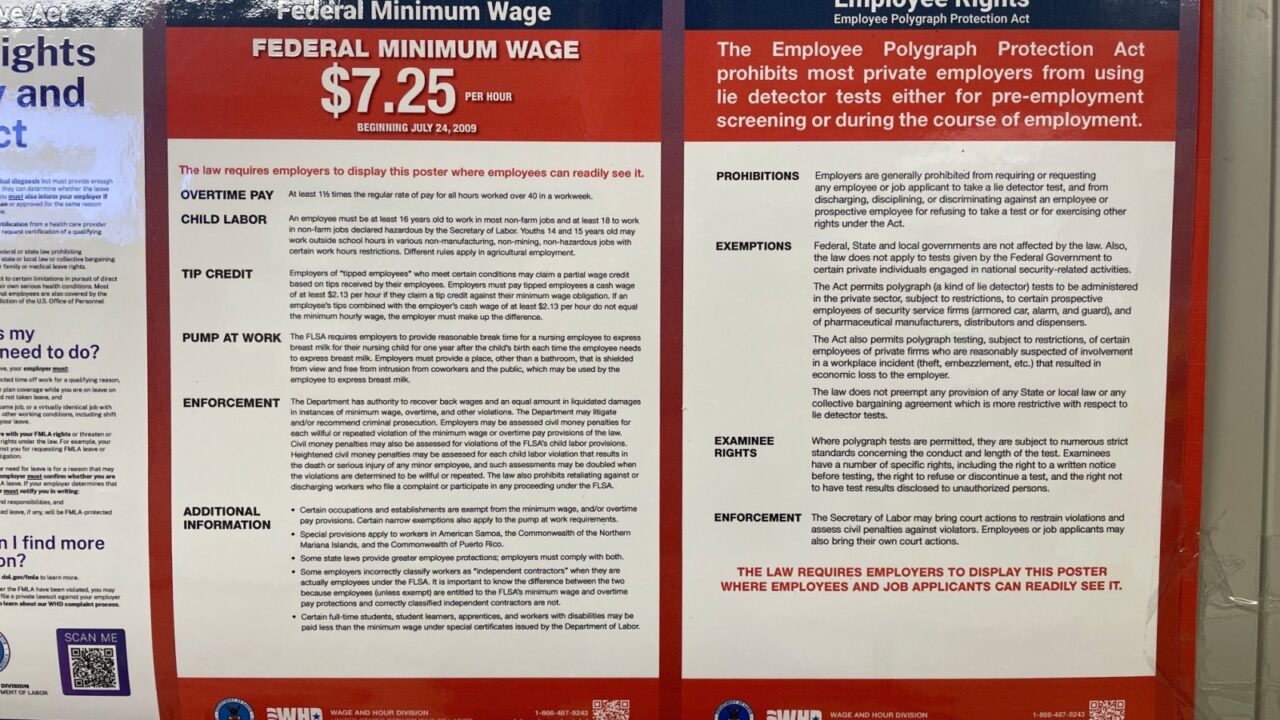
Federal baseline remains unchanged
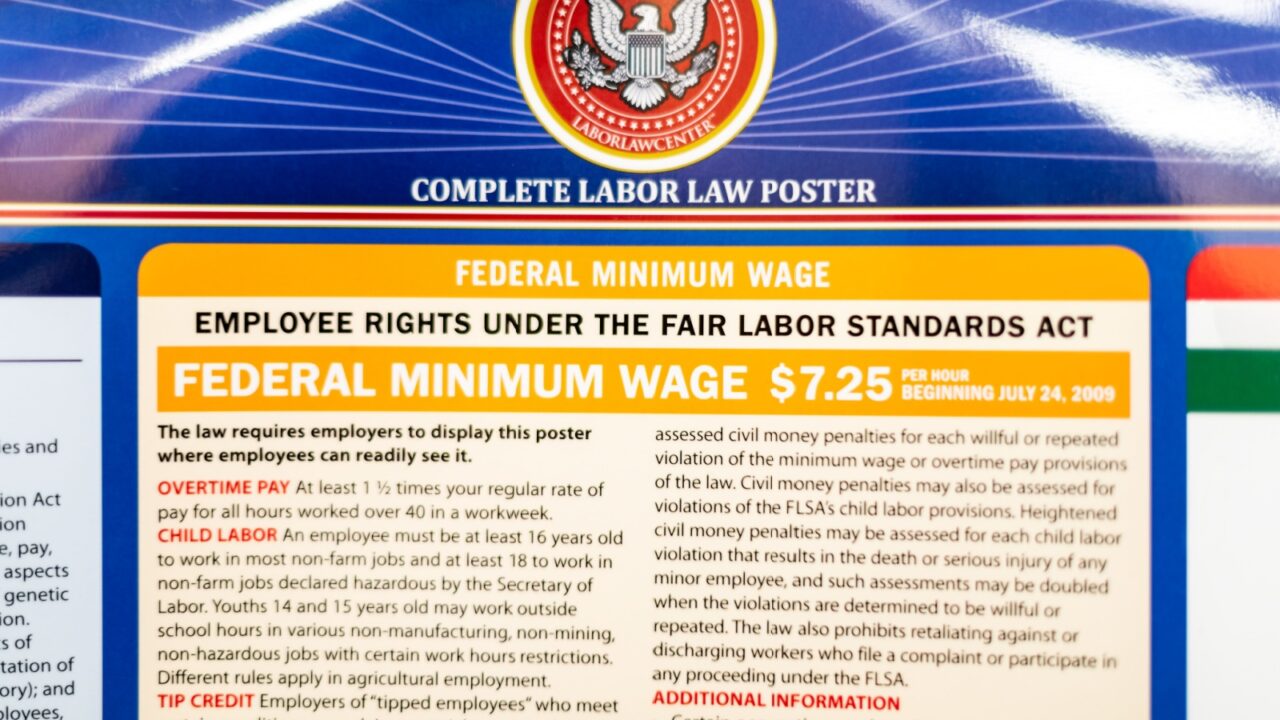
The federal minimum wage has remained unchanged at $7.25/hr since 2009. This baseline applies in states that have not enacted their own higher wage laws. States that lack an established state minimum default to this federal rate for most workers.
Several southern and midwestern states continue to use the federal figure as their wage floor in 2026. This creates a stark contrast compared to states with minimum wages above $15/hr. The result is significant wage disparity across the United States.
Regional differences in wages
Minimum wages do not just vary by state but by region within states as well. New York sets a higher minimum wage in New York City, Long Island, and Westchester at $17/hr in 2026. Other regions of New York state have a slightly lower rate of $16/hr.
Oregon’s 2026 three-tier minimum wage is: Portland metro $16.30/hr; standard counties $15.05/hr; non-urban counties $14.05/hr. These regional structures reflect cost differences within states.
States raising wages in 2026
Many states enacted wage increases effective January 1, 2026, following previously approved legislation and inflation adjustments. Arizona’s minimum wage for 2026 is $15.15/hr. Colorado’s statewide minimum for 2026 is $15.16/hr (localities such as Denver have higher local rates).
Maine’s 2026 minimum wage is $15.10/hr. Michigan’s 2026 minimum wage is $13.73/hr, while Rhode Island’s minimum wage for 2026 is $16.00/hr. These increases reflect scheduled adjustments passed in earlier years.
Cost of living and wage growth
Minimum wage growth often tracks with living costs in cities and states, especially where housing and essentials are expensive. In California, annual wage increases are tied to inflation measures that help protect workers’ purchasing power.
Fact: California’s 2026 statewide minimum ($16.90/hr) is among the highest statewide rates in the nation; the District of Columbia’s 2026 rate is $17.95/hr (with a scheduled increase to $18.40/hr on July 1, 2026).
Local increases and exceptions
Local governments also play a role in setting wage floors beyond state laws, especially in large cities. Seattle’s city minimum wage for 2026 is $21.30/hr, substantially above the Washington state floor; city ordinances have long allowed municipal rates to exceed state minima.
Santa Fe, New Mexico, is another example where local laws raised wages above state thresholds. These local variations show how city legislation can outpace both state and federal norms.
Fact: Forbes reported that Seattle’s local minimum wage climb set it among the highest in the nation, significantly above its state rate, as local rates often surpass statewide baselines.

Tipped and sector specific wages
Some states allow lower base wages for tipped employees if tips bring earnings above minimum standards. This tipped minimum rate differs greatly by jurisdiction. In states like Michigan and Nebraska, employers use a tip credit that counts gratuities toward minimum wage requirements.
Some jurisdictions have proposed phasing out tip credits or raising the base pay for tipped workers; Maryland has seen legislative proposals to substantially change tipped-worker rates, but these proposals remained subject to legislative debate and are not yet universal law.
States with no state wage law
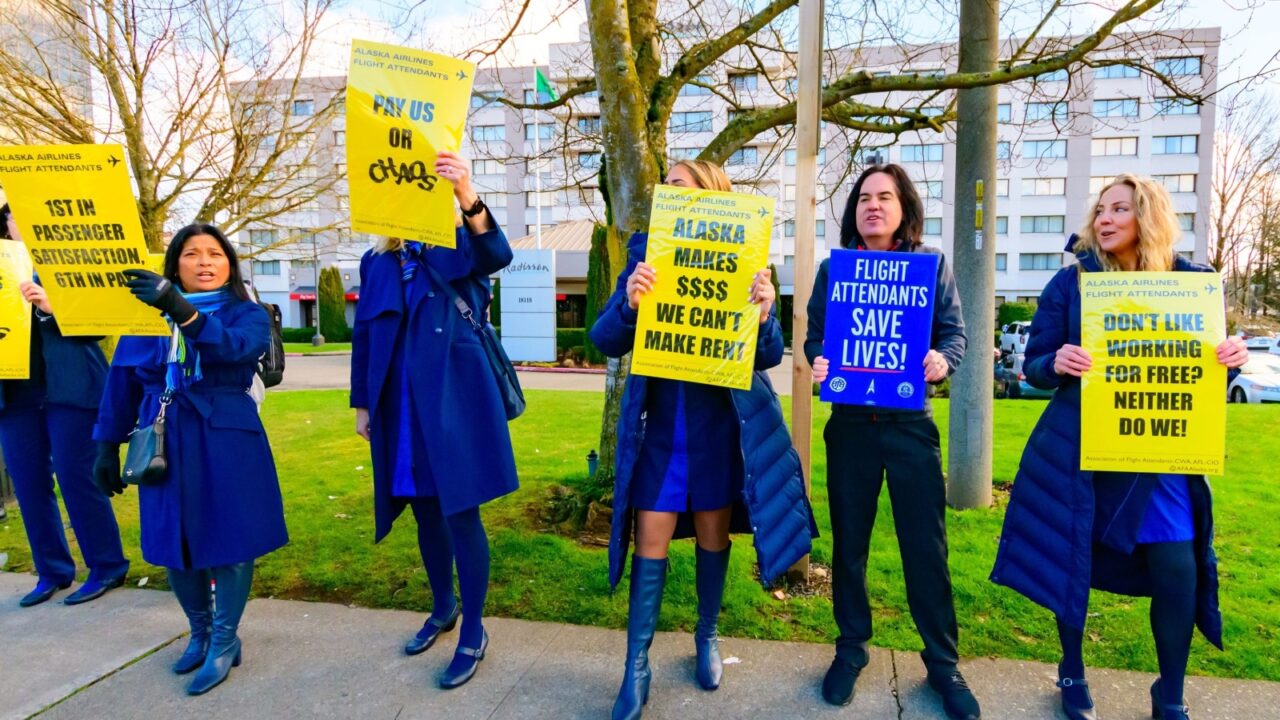
Several states lack their own statewide minimum-wage laws and therefore default to the federal minimum of $7.25/hr (examples include Alabama, Mississippi, and South Carolina). Some states have statutes or past codified figures lower than the federal level (parts of Georgia and Wyoming), but the federal Fair Labor Standards Act applies where the state rate is lower or no state law exists.
In these states, most covered workers earn at least the federal minimum wage. This creates a large gap when compared with states where minimum wages exceed $15/hr. The disparity reflects differing legislative priorities across regions.
Midwestern and low wage states
In parts of the Midwest and Mountain West, minimum wages remain below the 15$ threshold. Montana’s 2026 minimum wage is $10.85/hr. Ohio’s 2026 minimum wage is $11.00/hr for non-tipped employees and $5.50/hr for tipped employees.
West Virginia sets its state minimum wage at 8$ and 75 cents per hour. Nevada’s statewide minimum wage for 2026 is $12.00/hr. These figures illustrate the broad wage spectrum across the country.
Economic debate over wage levels
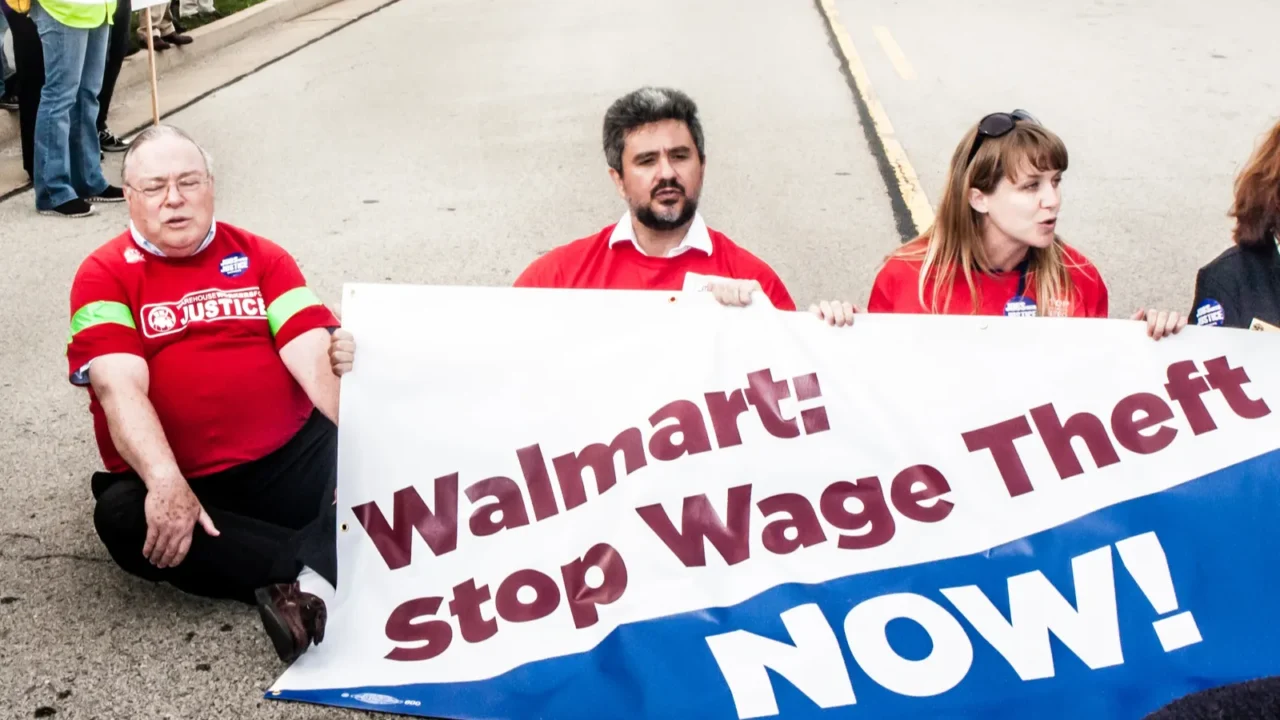
Minimum wage debates often center on economic impacts for workers and employers. Supporters argue that higher wages boost living standards and reduce poverty. Opponents warn of potential job losses or reduced hiring if labor costs rise too quickly.
Economic studies offer mixed conclusions about the effects on employment and prices. Policymakers continue to weigh these factors as they adjust laws. The evolving debate shapes how wage floors change over time.
Federal policy discussions
There are ongoing discussions at the federal level about raising the national minimum wage above $7.25/hr. Some lawmakers support proposals to raise the federal wage to $15, though no consensus has been reached. These debates occur in Congress as living costs remain a central concern in elections, especially as reports highlight why living in some US cities costs a fortune and what’s driving the prices.
Federal proposals could eventually unify or raise the wage floor across all states. However, until such action passes, state and local laws will continue to define wage floors.
Minimum wage outlook ahead
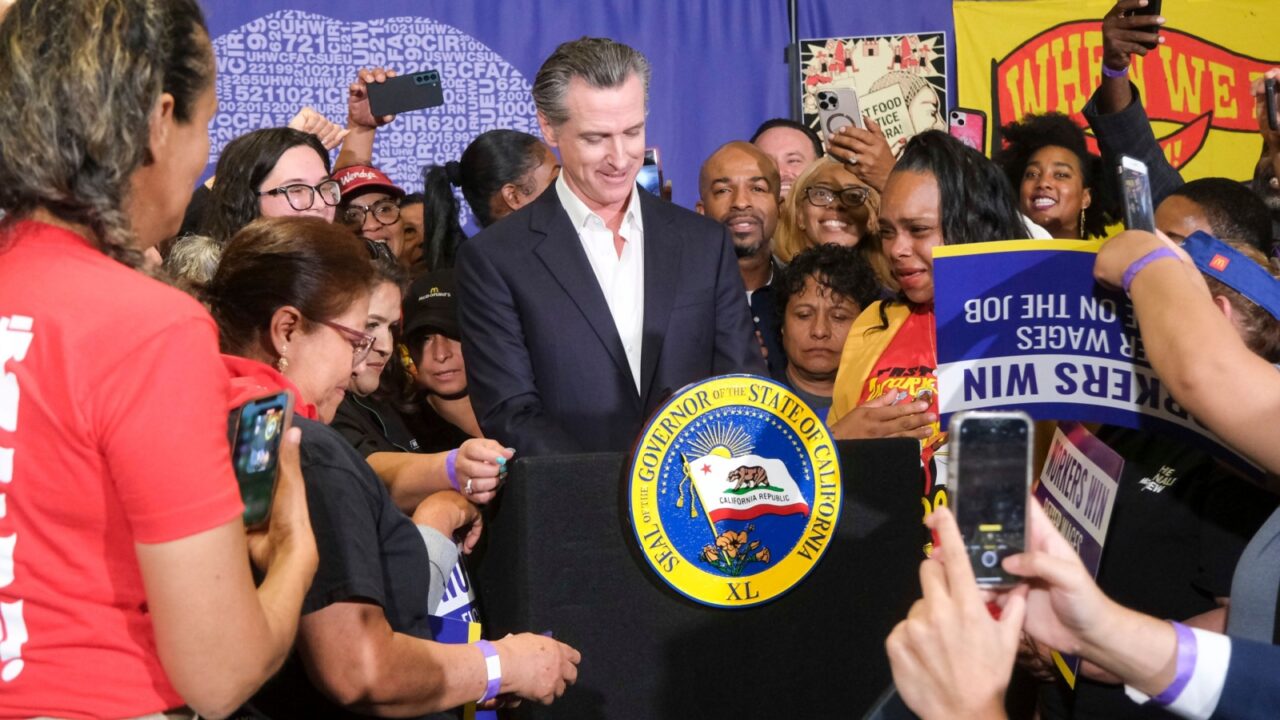
Minimum wage laws in 2026 reveal a diverse landscape shaped by state and local priorities. Wage floors vary from the federal baseline to over $17/hr in some states and cities. These differences reflect economic conditions from San Francisco to rural Montana and drive ongoing policy discussions.
As the cost of living changes and labor markets evolve, wage standards will likely shift further in future years.
Which state wage approaches seem most impactful for workers and communities right now? Share thoughts below.
This slideshow was made with AI assistance and human editing.
Don’t forget to follow us for more exclusive content right here on MSN.
Disclaimer: The images used are for illustrative purposes only and do not depict the actual locations mentioned.
Read More From This Brand:
